Subtotal $0.00

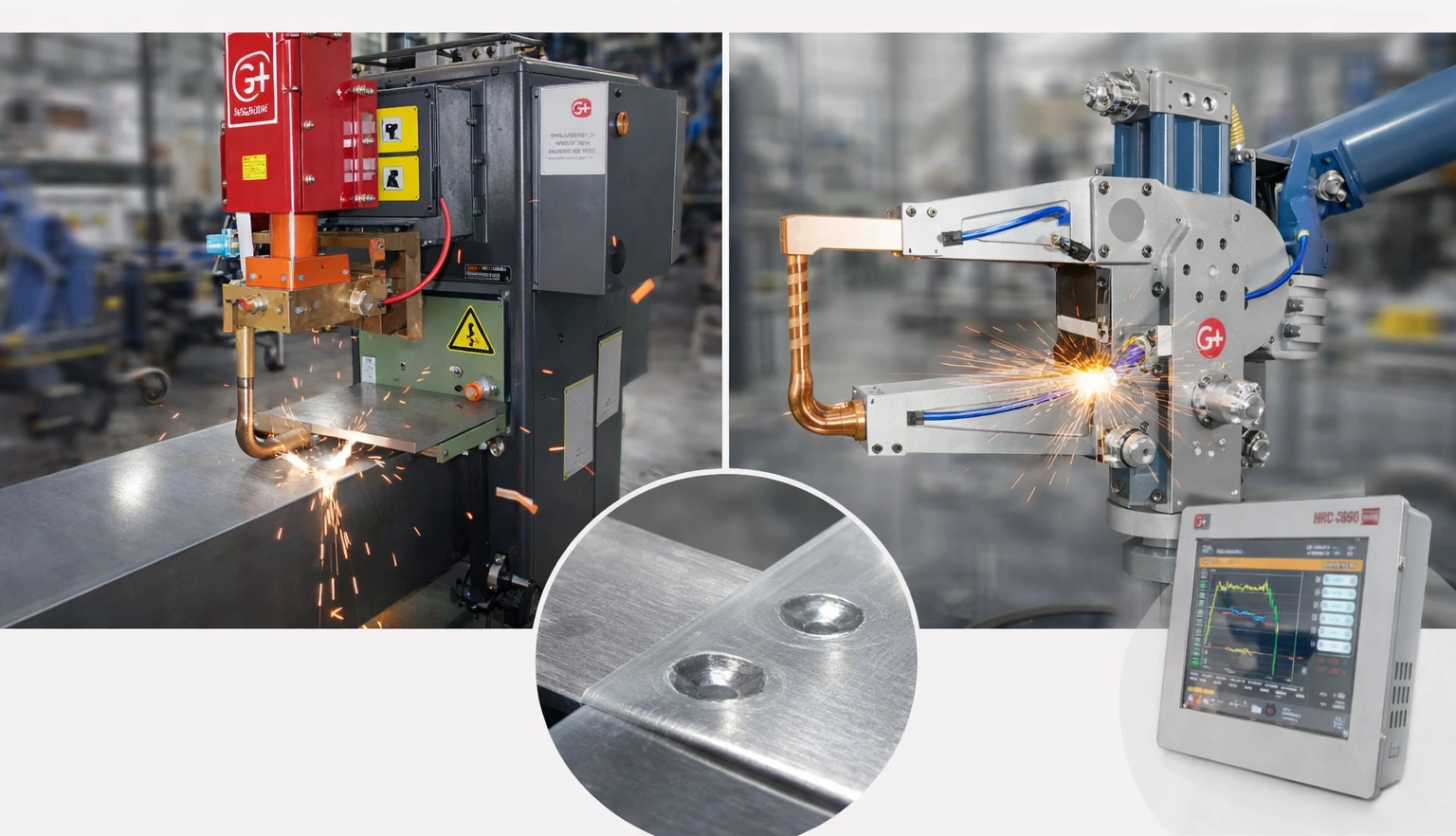
In today’s highly competitive manufacturing landscape, joining technology plays a critical role in ensuring product strength, production efficiency, and cost control. Among the most widely adopted solutions in high-volume metal assembly is the spot resistance welder a proven, fast, and highly repeatable method for joining sheet metals without filler materials.
For OEMs, automotive suppliers, appliance manufacturers, and industrial automation integrators, understanding the capabilities of a spot resistance welder is essential to optimizing production lines and achieving consistent weld quality. Heron Welder, a global leader in resistance welding and automated joining systems, delivers advanced spot welding solutions designed for modern smart factories.
What is a Spot Resistance Welder?
A spot resistance welder is a type of resistance welding machine that joins two or more overlapping metal sheets by applying controlled pressure and passing an electric current through the contact point.
The resistance at the interface generates heat, which melts the metal locally and forms a weld nugget. Once the current stops, the molten metal solidifies under pressure, creating a strong metallurgical bond.
Unlike arc welding, spot resistance welding does not require filler materials, shielding gases, or extensive post-processing. This makes it ideal for mass production environments where speed, consistency, and automation are critical.
Working Principle of Spot Resistance Welding
The operation of a spot resistance welder is based on three key parameters:
- Electrical current
- Electrode pressure
- Welding time
Step-by-Step Process
1. Clamping
Two copper alloy electrodes press the metal sheets together with controlled force.
2. Current Flow
A high electrical current passes through the electrodes and workpieces.
3. Heat Generation
Electrical resistance at the interface generates intense localized heat.
4. Nugget Formation
Metal at the contact point melts and forms a weld pool.
5. Solidification
When current stops, pressure is maintained, allowing the molten metal to solidify into a strong weld spot.
This cycle takes only milliseconds to seconds, making the spot resistance welder highly efficient for mass production.
Key Components of a Spot Resistance Welder
A modern industrial spot resistance welder typically includes:
1. Welding Transformer
Converts input power into low-voltage, high-current output required for welding.
2. Electrodes
Made of copper alloys to ensure high conductivity and wear resistance.
3. Welding Controller
Regulates current, time, and force for precise weld quality control.
4. Pneumatic or Servo Force System
Applies controlled electrode pressure for consistent weld strength.
5. Cooling System
Prevents overheating of electrodes and transformer during continuous operation.
Heron Welder integrates advanced MFDC (Medium Frequency Direct Current) technology in many of its systems, improving energy efficiency and weld stability.
Industrial Applications of Spot Resistance Welder
The spot resistance welder is widely used across industries that require fast, repeatable, and high-strength metal joining.
Automotive Industry
- Car body panels
- Chassis components
- EV battery trays
Home Appliances
- Refrigerators
- Washing machines
- Air conditioning units
Electrical & Electronics
- Control panels
- Metal enclosures
- Battery packs
Aerospace & Railways
- Lightweight structural assemblies
- Sheet metal frameworks
General Manufacturing
- Steel furniture
- HVAC ducting
- Industrial cabinets
Its adaptability makes it a core technology in automated production lines worldwide.
Advantages of Spot Resistance Welding
The popularity of the spot resistance welder is driven by its technical and economic advantages:
High Production Speed
Weld cycles are extremely fast, ideal for assembly lines.
Strong and Clean Joints
Produces consistent weld nuggets with minimal distortion.
Automation Friendly
Easily integrated into robotic systems and CNC production lines.
No Consumables
No need for filler wire or shielding gas, reducing operating cost.
Energy Efficient
Modern MFDC systems reduce power consumption significantly.
Minimal Post-Processing
Smooth joints eliminate the need for grinding or finishing.
For OEMs focused on scalability, these benefits translate directly into lower production cost and higher output.
Spot Resistance Welder vs Other Welding Methods
Understanding how spot welding compares with other methods helps manufacturers choose the right process.
Spot Welding vs MIG Welding
- Spot welding is faster and cleaner for sheet metal
- MIG is better for thicker materials and structural welds
Spot Welding vs Projection Welding
- Spot welding focuses on direct contact points
- Projection welding uses pre-formed projections for multiple welds at once
Spot Welding vs Seam Welding
- Spot welding creates discrete points
- Seam welding produces continuous leak-proof joints
Each method has its place, but the spot resistance welder remains the most efficient for high-speed sheet metal assembly.
Best Practices for Optimal Spot Welding Performance
To maximize the performance of a spot resistance welder, manufacturers should follow these engineering best practices:
Proper Material Preparation
Ensure surfaces are clean and free from oxidation or oil.
Correct Electrode Selection
Use the right electrode shape and material for the application.
Optimized Welding Parameters
Adjust current, pressure, and time based on material thickness.
Regular Maintenance
Inspect electrodes for wear and ensure proper cooling system function.
Automation Calibration
For robotic systems, ensure accurate positioning and force control.
Following these practices ensures consistent weld quality and longer machine life.
Why Choose Heron Welder for Spot Resistance Welding Solutions?
Heron Welder specializes in advanced industrial welding systems designed for global manufacturing demands. Our spot resistance welder solutions are engineered for performance, reliability, and automation readiness.
What Sets Heron Apart:
- Advanced MFDC resistance welding technology
- High-precision welding controllers
- Integration with robotic automation systems
- Custom-engineered production line solutions
- Proven expertise in automotive and OEM manufacturing sectors
From standalone machines to fully automated welding production lines, Heron provides end-to-end solutions tailored to your factory needs.
Frequently Asked Questions (FAQs)
1. What materials can a spot resistance welder join?
It is commonly used for steel, stainless steel, aluminum alloys, and coated metals, depending on machine configuration.
2. Is spot resistance welding suitable for automation?
Yes, it is one of the most automation-friendly welding methods and is widely used in robotic assembly lines.
3. How strong is a spot weld compared to other welding types?
A properly executed spot weld can match or exceed the strength of the base material in lap joints, especially in thin sheet metals.
4. What industries benefit most from spot welding?
Automotive, appliance manufacturing, electronics, HVAC, and general sheet metal fabrication industries benefit the most.
5. Can spot welding reduce production cost?
Yes, due to its speed, low consumable usage, and automation capability, it significantly reduces per-unit manufacturing costs.
Final Thoughts
The spot resistance welder remains a cornerstone of modern manufacturing, offering unmatched speed, precision, and scalability for sheet metal joining applications. As industries move toward automation and smart production systems, the demand for reliable and efficient resistance welding technology continues to grow.
Heron Welder stands at the forefront of this transformation, delivering high-performance welding systems engineered for industrial excellence.
If you are looking to upgrade your production line, improve weld consistency, or implement automated welding solutions, Heron Welder is ready to support your project.
Contact Heron today to request a customized quote or speak with our engineering team about tailored spot resistance welding and automation solutions for your factory.