Subtotal $0.00

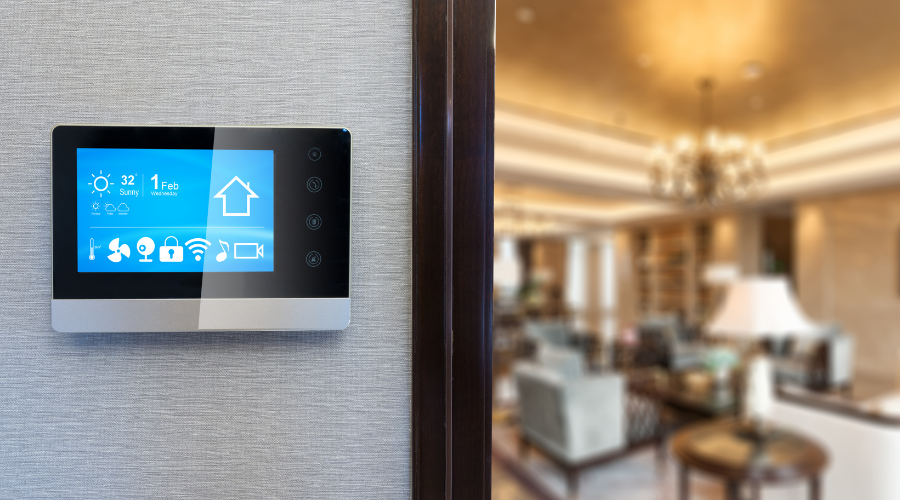
The smart home market is evolving from a collection of connected gadgets into an integrated digital infrastructure for residential living. Lighting, security systems, thermostats, appliances, entertainment equipment, healthcare devices, and energy-management systems can now communicate through centralized platforms and increasingly respond to user behavior, environmental conditions, and automated routines.
This transformation is significant because the value of a smart home is no longer limited to convenience. Connected technologies can help homeowners improve security, manage energy consumption, support independent living, automate repetitive tasks, and remotely monitor properties. For technology providers and residential developers, smart-home functionality is consequently becoming part of the broader value proposition of a connected building.
The global smart home market reached approximately USD 59.81 billion in 2025 and is projected to grow at a compound annual growth rate of 15.00% from 2026 to 2035, reaching nearly USD 241.96 billion by 2035. This expansion reflects increasing consumer adoption, falling connectivity barriers, growth in new residential construction, wider broadband availability, and greater integration of artificial intelligence into home-management platforms.
What is driving growth in the global smart home market?
The smart home market is growing because consumers increasingly want homes that are connected, automated, secure, energy-efficient, and manageable remotely. Falling device costs, wireless connectivity, voice interfaces, AI-powered automation, and interoperability standards are making connected-home technology easier to deploy and use.
Early smart-home adoption often required separate hubs, proprietary applications, and technically complicated installations. That model created friction for consumers because adding a new product could mean learning another application or determining whether it was compatible with existing equipment.
The industry is gradually moving toward a more integrated experience. Matter, an industry connectivity standard, is designed to improve interoperability among smart-home devices and ecosystems. Apple’s developer documentation describes Matter as a standard that enables control of smart-home devices from different manufacturers, while Amazon supports Matter devices through Alexa and local Wi-Fi or Thread connections.
This matters commercially because interoperability can reduce one of the biggest barriers to adoption: uncertainty about whether a device will work with the rest of the home. The Connectivity Standards Alliance’s Matter 1.4.1 release also focused on easier commissioning through features such as enhanced setup flows, multi-device QR codes, and NFC-based onboarding information.
Energy management is another major growth driver. Smart thermostats, lighting controls, appliances, sensors, and energy-monitoring systems can automate consumption according to occupancy, schedules, tariffs, or environmental conditions. Samsung’s SmartThings platform, for example, now promotes AI-powered energy management and connected control across appliances and other home devices.
The result is a market increasingly positioned around outcomes rather than individual devices. Consumers may buy a smart thermostat for comfort, but the larger opportunity for vendors lies in connecting that thermostat with lighting, sensors, appliances, security, and energy-management systems to create a coordinated residential environment.
Which smart-home products are creating the strongest demand?
Security and access control, lighting, HVAC control, appliances, entertainment, home healthcare, and smart-kitchen technologies all contribute to market growth, but their value propositions differ. Security tends to address an immediate need for protection, while HVAC and lighting increasingly combine comfort with energy management.
Security and access control remains a particularly compelling application because connected cameras, video doorbells, smart locks, motion sensors, and alarms provide homeowners with remote visibility and control. A homeowner can receive an alert when a door opens, view a camera feed remotely, or provide temporary access without physically handing over a key.
Lighting control represents another accessible entry point. Smart bulbs, switches, dimmers, and sensors allow lighting to respond automatically to occupancy, schedules, daylight, or user preferences. More sophisticated systems can connect lighting with security routines, entertainment scenes, and energy-management strategies.
HVAC control has an especially strong economic proposition because heating and cooling can represent a substantial share of household energy use. Smart thermostats and connected HVAC equipment can adjust settings according to occupancy, schedules, outdoor conditions, and user preferences rather than operating continuously at a fixed level.
The market is also expanding into appliances and smart kitchens. Refrigerators, ovens, dishwashers, washing machines, robot vacuum cleaners, and other appliances can increasingly communicate with home platforms. Amazon’s current Matter support includes appliances such as room air conditioners and dishwashers, alongside lighting, thermostats, air purifiers, locks, sensors, and robotic vacuums.
Home healthcare is a particularly important long-term opportunity. Connected sensors and monitoring devices can help support older adults, people receiving care at home, and patients participating in remote-care programs. NIST’s recent work on smart-home integration with telehealth highlights both the potential and the cybersecurity complexity of bringing consumer IoT devices into healthcare environments.
How are proactive and behavioural smart-home systems changing automation?
Smart-home software is increasingly shifting from simple commands toward proactive and behavioural automation. Instead of merely responding when users press a button, advanced systems can learn patterns, anticipate needs, and coordinate several devices around a particular situation.
A behavioural system can identify recurring patterns such as a household turning down the thermostat at night, switching off lights before bedtime, or starting certain appliances at particular times. Over time, software can use these patterns to automate routine actions.
Proactive systems take this concept further. A home platform may identify unusual occupancy, suggest an energy-saving action, adjust devices according to changing conditions, or initiate a predefined routine without requiring a direct command.
Artificial intelligence is accelerating this transition. The smart-home interface is gradually moving away from individual device control toward natural-language interaction and context-aware automation. Amazon, for example, supports smart-home control through voice interaction and increasingly integrates Matter devices into Alexa’s local-control environment.
However, useful automation depends on accurate context. A system that turns off lights whenever it detects inactivity may create frustration if someone is reading quietly in another room. Similarly, an HVAC system that aggressively optimizes energy consumption can compromise comfort if its assumptions about occupancy are wrong.
The commercial opportunity therefore lies not simply in adding AI but in making automation predictable and understandable. Consumers need to know why a system took an action and retain straightforward ways to override it. The winning platforms will likely be those that combine intelligence with transparency rather than treating automation as a black box.
Why are retrofit projects and new construction both important?
The smart home market is expanding through two complementary routes: retrofitting existing properties and integrating connected systems into new residential construction. Retrofit demand creates a large installed-base opportunity, while new construction allows developers to design connectivity into the property from the beginning.
Retrofit products are attractive because homeowners can add smart lighting, locks, cameras, thermostats, sensors, plugs, and appliances without undertaking major structural changes. Wireless connectivity is particularly important here because it reduces installation requirements and allows individual devices to be added incrementally.
A homeowner might begin with a smart doorbell and a few lighting controls before eventually adding thermostats, sensors, appliances, and energy-management equipment. This gradual adoption model expands the addressable market because consumers do not have to make a large upfront investment.
New construction presents a different opportunity. Developers can incorporate structured wiring, network infrastructure, smart electrical systems, connected HVAC equipment, security systems, and centralized controls during construction. Smart-home functionality can then become part of the property’s design rather than an aftermarket addition.
This distinction is important for commercial stakeholders. Retrofit products compete heavily on ease of installation and compatibility, while new-construction solutions compete on integration, reliability, aesthetics, lifecycle management, and developer economics.
The growth of connected residential developments can also broaden the role of smart-home companies. Builders and property managers may deploy systems at scale, creating opportunities for recurring software, monitoring, maintenance, and energy-management services rather than relying solely on one-time hardware sales.
Which protocols are shaping the smart home market?
Wireless connectivity is increasingly central to consumer smart-home adoption, although wired systems remain important in premium, large-scale, and professionally installed environments. The market is therefore moving toward a mixed architecture in which Wi-Fi, Thread, Matter, Ethernet, and other technologies can coexist.
Wireless systems have a major advantage in retrofit environments because they can be installed without extensive cabling. Wi-Fi is widely available in homes, while lower-power technologies such as Thread are designed for connected-device networks that require efficient, reliable communication.
Matter is changing the competitive landscape because it provides a common application-layer standard across participating ecosystems. Amazon’s current implementation supports Matter over Wi-Fi and Thread, while Apple provides Matter support for commissioning and controlling compatible accessories through its platforms.
Samsung is also expanding Matter integration through SmartThings. In late 2025, the company announced support for Matter 1.5 and compatibility with Matter cameras, following its earlier integration of Matter devices into SmartThings.
Wired technologies nevertheless retain an important role. Professional installations in luxury residences, multi-dwelling properties, and large buildings can prioritize high reliability, bandwidth, centralized control, and serviceability. Ethernet and other wired infrastructure may also provide the backbone for wireless access points, security equipment, entertainment systems, and smart-building controllers.
The practical direction of the market is therefore not a simple replacement of wired systems by wireless ones. Instead, successful smart-home environments will increasingly use the most appropriate connectivity technology for each device and application while presenting the consumer with a unified interface.
Which regions are leading the smart home industry?
North America remains a major smart-home market because of high consumer awareness, established technology ecosystems, strong broadband infrastructure, and early adoption of connected security, voice assistants, thermostats, and entertainment products. Large technology companies have also helped make smart-home control familiar to mainstream consumers.
Europe has strong potential through energy efficiency, building modernization, and increasingly sophisticated connected-home infrastructure. Energy management is particularly relevant because smart-home technologies can support more efficient use of heating, cooling, lighting, and appliances.
Asia Pacific is one of the most important long-term growth regions because of urbanization, rising household incomes, expanding digital infrastructure, large electronics manufacturing ecosystems, and the construction of new residential properties. Countries including China, Japan, South Korea, India, Singapore, and Australia have different adoption patterns, but collectively provide a substantial opportunity for connected-home technologies.
Samsung’s SmartThings strategy illustrates how the Asia-based consumer-electronics ecosystem is integrating smart-home control into products already present in households. TVs, refrigerators, air conditioners, washing machines, mobile devices, and other equipment can increasingly participate in the same connected environment.
Latin America and the Middle East and Africa are also developing opportunities as connectivity improves and consumers gain access to more affordable smart devices. In these markets, wireless retrofit products can be particularly valuable because they allow households to adopt smart functionality without extensive renovation.
Regional growth will nevertheless depend on more than device affordability. Local electricity infrastructure, broadband reliability, housing characteristics, privacy expectations, climate, building regulations, and consumer purchasing power all influence which smart-home technologies achieve scale.
What challenges could slow smart home market growth?
The smart home industry’s biggest challenges are cybersecurity, privacy, interoperability, installation complexity, device fragmentation, unreliable connectivity, and concerns about long-term product support. As more household functions become connected, a technology failure can become more disruptive than the failure of an isolated gadget.
Cybersecurity is particularly important because smart-home devices collect information about occupancy, routines, location, behavior, and sometimes health. NIST research has found that consumers recognize privacy and security concerns but may have limited technical knowledge or limited options for mitigating those risks.
The issue becomes even more serious when smart-home systems intersect with healthcare. NIST’s 2025 guidance on telehealth integration warns that consumer IoT devices can create pathways into healthcare environments if they are not properly segmented and secured. Its recommendations include access control, authentication, network segmentation, continuous monitoring, and data security.
Device longevity is another challenge. Consumers may hesitate to invest in connected products if they fear that cloud services will be discontinued or software updates will end. For this reason, vendors increasingly need to consider security updates and lifecycle support as part of the product proposition.
Interoperability is improving, but it has not eliminated complexity. Matter can simplify compatibility for supported devices, yet not every feature or device capability necessarily behaves identically across ecosystems. Certification, firmware updates, bridges, hubs, and platform-specific functions can still affect the user experience.
The industry therefore has an important lesson to learn: smart-home growth depends on trust as much as innovation. A device that works reliably, protects user data, receives security updates, and integrates predictably with other products is more valuable than one that simply offers a larger feature set.
Who are the leading companies in the smart home market?
The competitive landscape includes industrial automation companies, building-technology specialists, consumer-electronics manufacturers, technology platforms, and diversified appliance businesses. Competition is increasingly shifting from individual devices toward ecosystems capable of controlling multiple categories of household equipment.
The companies covered in the supplied market assessment include Honeywell International, Johnson Controls International, Schneider Electric, Siemens AG, United Technologies Corporation, Apple, Amazon, Centrica Connected Home, Emerson Electric, General Electric, Samsung, and Sony.
Industrial and building-technology companies such as Honeywell, Johnson Controls, Schneider Electric, and Siemens bring expertise in HVAC, building controls, energy management, security, and automation. Their capabilities are particularly relevant to professionally installed residential systems, premium properties, and the convergence between smart homes and broader building-management technologies.
Consumer technology companies compete differently. Apple positions Home around its device ecosystem and Matter interoperability, while Amazon integrates Alexa with a broad range of connected devices and supports local Matter connectivity. Samsung uses SmartThings to connect its extensive consumer-electronics portfolio with third-party devices and Matter-compatible products.
Sony and other electronics manufacturers can similarly leverage televisions, audio equipment, gaming systems, and connected devices to strengthen their position within the entertainment side of the smart home.
The competitive battleground is consequently becoming broader. Hardware specifications still matter, but ecosystem breadth, interoperability, software quality, AI capabilities, cybersecurity, energy-management functions, and after-sales support are increasingly decisive. Companies that can combine these capabilities into a seamless experience have an opportunity to capture greater value from the expanding market.
What is the outlook for the global smart home market through 2035?
The smart home market is entering a phase in which connectivity, AI, energy management, security, and interoperability will increasingly converge. Based on the supplied forecast, the market is expected to rise from USD 59.81 billion in 2025 to approximately USD 241.96 billion by 2035, representing a 15.00% CAGR.
The most important change will be the move from isolated smart products to coordinated home ecosystems. A thermostat that communicates with occupancy sensors, a security system that works with lighting, and appliances that respond to energy conditions can create substantially more value than individual connected products operating independently.
Matter and related interoperability initiatives can help reduce fragmentation, while AI can make automation more context-aware. At the same time, energy-management requirements and rising interest in home healthcare can expand the definition of what a smart home is expected to accomplish.
For manufacturers, the opportunity is substantial but comes with higher expectations. Consumers will increasingly expect products to work together, protect personal information, remain supported over time, and provide tangible benefits rather than novelty.
For residential developers, the opportunity is to treat smart-home infrastructure as part of the property’s long-term value rather than an optional gadget package. For consumers, the strongest systems will be those that solve practical problems—security, energy costs, comfort, accessibility, and convenience—without making everyday life more complicated.
Ultimately, the smart home market’s growth will be determined not by how many devices can be connected, but by how intelligently and reliably those devices can work together. The companies that make that experience secure, interoperable, useful, and easy to manage are likely to shape the next decade of connected residential living.