Subtotal $0.00

Inside Body-in-White Production: How the Modern Automotive Spot Welder Builds a Car
Walk through any high-volume car plant and the sound you hear in the body shop is the rhythmic hiss and clunk of hundreds of welding guns firing in sequence. An automotive spot welder is the workhorse behind the body-in-white stage, where stamped panels are joined into the rigid shell of the vehicle before paint and trim ever appear. A single car body can carry between three and five thousand spot welds, each one contributing to crashworthiness, stiffness, and long-term durability. Getting every one of those welds right, at takt times measured in seconds, is an engineering discipline that blends power electronics, robotics, and relentless quality control.
The Body-in-White Joining Challenge
A modern vehicle body mixes mild steel, high-strength and ultra-high-strength steels, galvanized coatings, and increasingly aluminum panels and closures. Each combination has its own weldability window: the current range between a weak undersized nugget and expulsion that throws molten metal and damages the joint. Coated steels demand higher current to punch through the zinc layer, while advanced high-strength steels are sensitive to heat input that can soften the heat-affected zone. Add stack-ups of three or four sheets at pillar and rail joints, and the welding equipment must deliver precise, repeatable energy while adapting to variations in panel fit-up, coating thickness, and electrode condition. This is why automotive programs validate weld schedules on dedicated coupons long before the first production body moves down the line.
From Pedestal Guns to Robotic Welding Cells
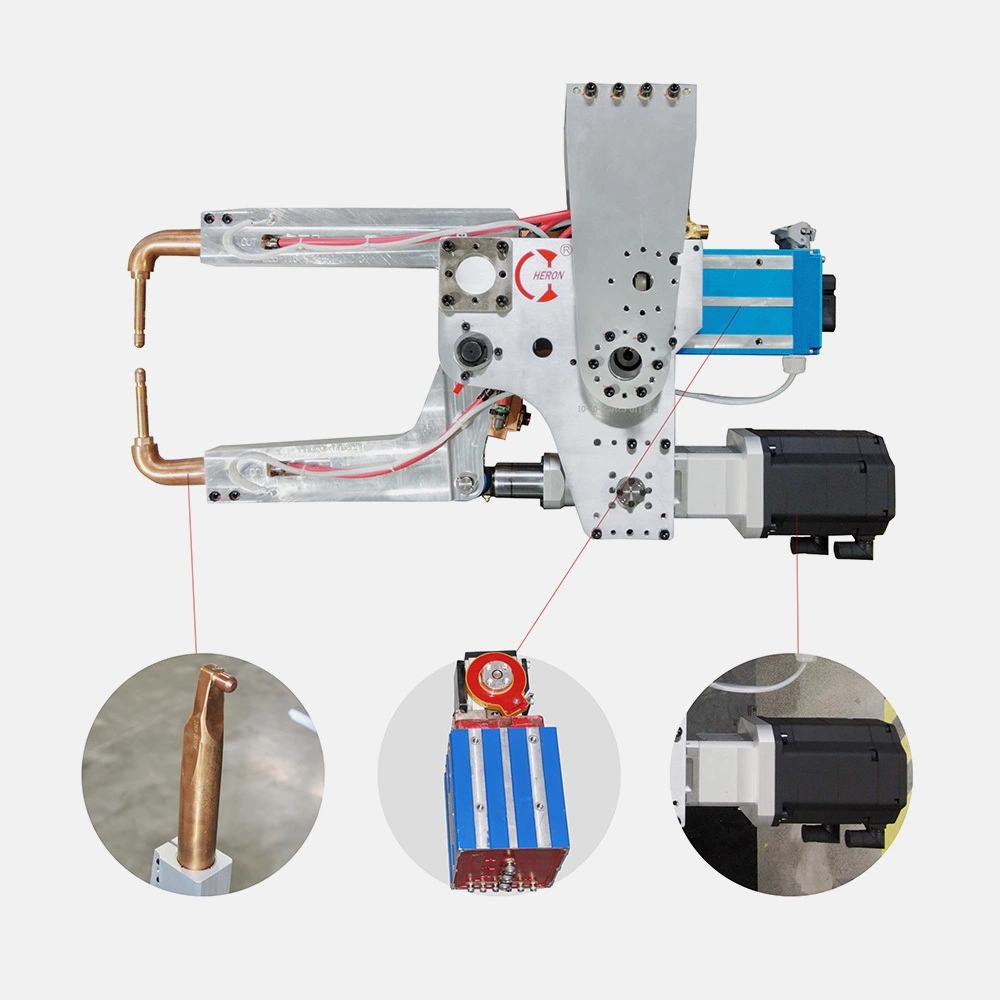
Early body shops relied on manual and pedestal welders with operators positioning each panel. Today’s plants are dominated by robotic welding cells, where six-axis robots carry servo-driven weld guns to programmed points with sub-millimeter accuracy. Servo guns control electrode force independently of the robot’s motion, applying exactly the squeeze force each schedule calls for and measuring tip displacement during the weld. Medium-frequency DC (MFDC) power sources dominate these cells because their fast current regulation handles the coated and high-strength steels of modern bodies, and their balanced three-phase draw suits the heavy electrical loads of a modern body shop.
Adaptive Controls: Welding Every Body the Same
No two car bodies are perfectly identical, so modern automotive welders do not simply replay a fixed schedule. Adaptive controls monitor dynamic resistance, current, and electrode displacement in real time and adjust the weld as it happens. If a gap between panels increases the resistance, the controller extends or reshapes the current pulse to still grow a full nugget; if conditions are ideal, it avoids pumping in excess heat. The data from every weld feeds into plant quality systems, giving engineers a complete digital record of the body’s structural joints and the ability to trace any suspect weld back to its exact production moment.
Quality Systems That Catch a Bad Weld Before It Ships
With thousands of welds per body and no tolerance for structural defects, automotive plants layer multiple verification methods over the welding process itself. Destructive testing of sample bodies in the teardown lab measures nugget diameters against standards, while ultrasonic and phased-array inspection checks production welds without cutting. Weld controllers flag out-of-tolerance signatures in real time, diverting suspect bodies to repair stations rather than letting them continue down the line. Tip dressing and changing follow strict schedules based on weld counts, because electrode geometry directly controls current density. Together, these systems hold weld quality at levels measured in single-digit parts per million, a requirement that shapes every choice of gun, controller, and power source on the floor.
Electrification and the Next Generation of Body Welding
Electric vehicles are changing what the automotive spot welder must do. Battery enclosures and aluminum-intensive structures push plants toward more aluminum spot welding, which demands much higher currents, shorter weld times, and aggressive electrode cooling compared with steel. Multi-material bodies that mix aluminum, steel, and composites in one structure require joining strategies planned at the design stage, with weld guns specified for the most demanding stack-up on the vehicle. At the same time, data integration keeps deepening: weld controllers now stream process data into manufacturing execution systems, enabling predictive maintenance that replaces a gun’s electrodes before quality drifts rather than after. The body shop of the near future will weld more materials with tighter documentation than ever before.
Conclusion
automotive spot welder systems have evolved from simple shop equipment into the precision core of body-in-white manufacturing, where MFDC power, servo guns, adaptive controls, and layered quality systems together produce thousands of dependable joints per vehicle. As electrification and multi-material designs raise the bar, the plants that invest in capable welding technology and rigorous process validation will be the ones delivering bodies that are lighter, safer, and built right the first time.
#AutomotiveSpotWelder #BodyInWhite #RoboticWelding #HeronWelder