Subtotal $0.00

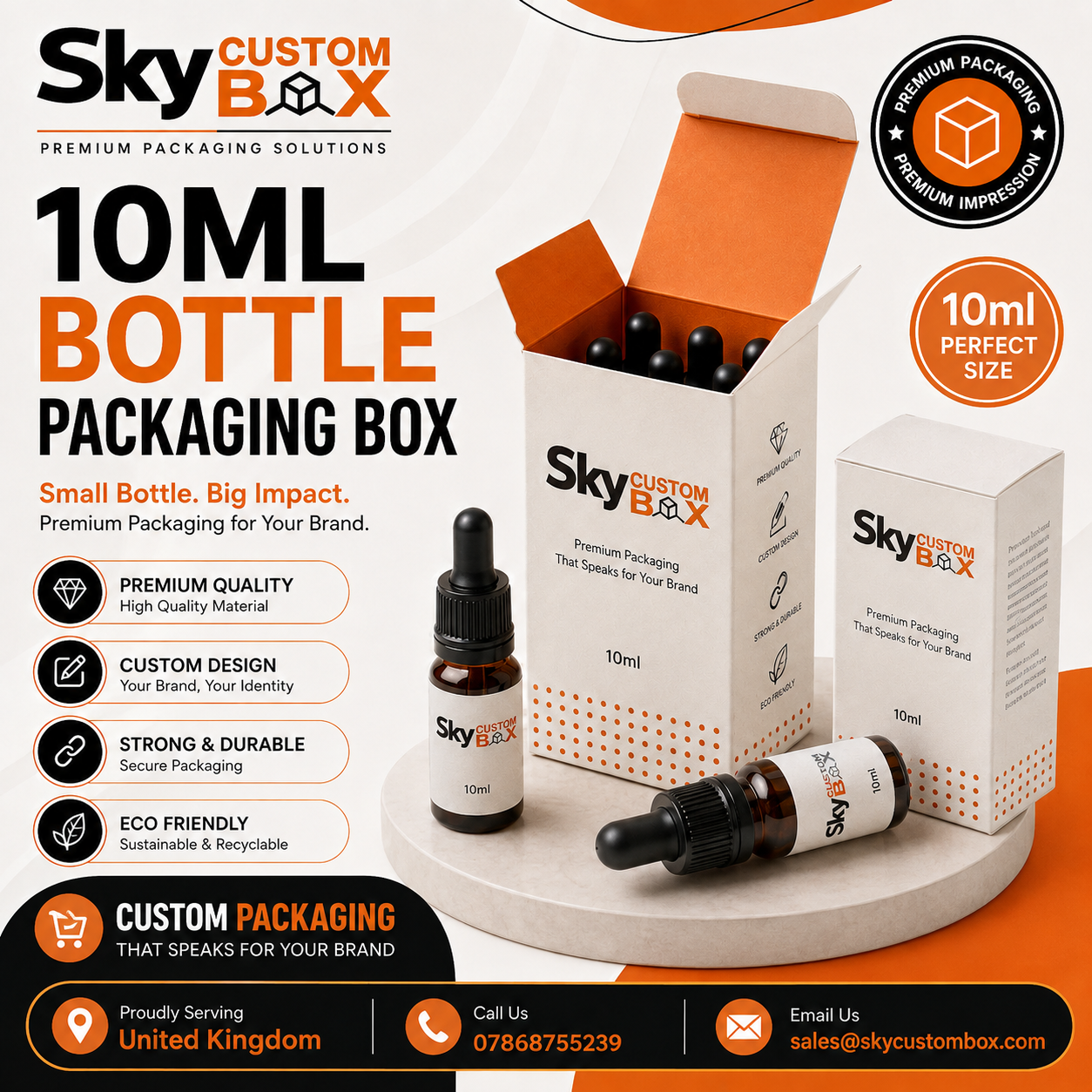
Small bottles can create surprisingly large packaging challenges. A 10ml bottle may contain perfume, essential oil, skincare serum, cosmetic products, samples, or other specialist liquids, but its compact size leaves limited space for branding, product information, and protective features. Well-designed packaging therefore needs to balance appearance, practicality, protection, and usability.
When developing an 10ml bottle packaging box, designers should consider more than simply creating a container that fits the bottle. The packaging should protect the product during handling and transportation while presenting information clearly and creating a consistent visual identity.
From structural design and material selection to printing and finishing, several factors influence how effectively packaging performs on a retail shelf or during online delivery.
Start With the Bottle and Its Intended Use
The first step in designing packaging is understanding the bottle itself. Dimensions, shape, cap style, material, and weight all influence the structure required for the box.
A box designed around a standard cylindrical bottle may require a different internal structure from packaging intended for a rectangular glass container. Similarly, bottles with droppers, spray pumps, or decorative caps may need additional clearance.
Before production, packaging designers should consider:
- Bottle height, width, and overall diameter
- Cap or closure dimensions
- Bottle weight and material
- Fragility of the container
- Required internal clearance
- Product orientation during storage
- Shipping and handling conditions
- Space required for labels and product information
Accurate measurements are particularly important for boxes for 10ml bottles, because even small dimensional errors can allow a bottle to move inside the package.
An internal insert, divider, or fitted platform can help reduce movement. For fragile glass bottles, this additional structure can also reduce the likelihood of impact damage during transportation.
Make Compact Packaging Easy to Understand
A small package has limited visual real estate, so every design element should have a purpose. Instead of filling the entire surface with graphics, brands can create a clear visual hierarchy.
The product name should generally be easy to identify, while supporting information can be arranged around it. Typography, spacing, imagery, and colour should work together rather than competing for attention.
For example, a compact package might organize information into three levels:
- Primary information: Brand and product name.
- Secondary information: Product type, variant, scent, or key characteristic.
- Supporting information: Ingredients, directions, warnings, quantity, or regulatory details.
This approach helps customers understand the product quickly.
For products sold online, packaging photography also matters. A distinctive box can make product images more recognizable across ecommerce listings, social media posts, and digital catalogues.
Choose Materials According to Protection Requirements
Packaging material should reflect the product’s weight, fragility, storage conditions, and distribution method.
Paperboard is widely used for small retail boxes because it can provide a good balance between printability, structural performance, and presentation. Different grades can be selected depending on the level of protection required.
For delicate products, designers may consider:
- Stronger paperboard grades
- Folding carton structures
- Internal inserts
- Die-cut supports
- Protective coatings
- Laminated surfaces
Material selection should also account for how the package will be handled after purchase. A product intended for direct retail display may have different requirements from one that is shipped individually through an ecommerce fulfilment system.
Sustainability is another increasingly important consideration. Packaging designs can reduce unnecessary material by using accurate dimensions and efficient structural layouts. Recyclable paperboard and responsibly sourced materials may also support broader environmental objectives, provided they are appropriate for the product and local recycling infrastructure.
Designing 30ml Packaging With the Same Brand System
Although the focus may be on small 10ml containers, packaging systems should ideally accommodate multiple product sizes.
For example, a brand selling both 10ml and 30ml products may want the packaging to share common visual characteristics. A 30ml bottle box can use the same typography, colours, logo placement, and graphic language while adapting the dimensions and structural requirements to the larger container.
Creating a consistent packaging family offers several practical advantages.
Consistent visual identity
Customers can more easily recognize related products when their packaging shares a recognizable design system.
Easier product expansion
A structured packaging system makes it easier to introduce additional bottle sizes or product variations without redesigning the entire visual identity.
Stronger shelf presentation
Related products displayed together can create a more organized appearance in retail environments.
Better digital branding
Consistent packaging can also improve the appearance of product collections photographed for websites and social platforms.
The key is to maintain consistency without making every package look identical. Colour variations, product names, labels, or subtle graphic differences can help customers distinguish between individual products.
Common Packaging Problems and Practical Solutions
Small-bottle packaging frequently encounters several recurring problems. Identifying them before production can save material, time, and unnecessary redesign costs.
Problem: The bottle moves inside the box
Excessive internal space can allow the bottle to shift during transport.
Solution: Use a correctly sized internal structure or insert to hold the bottle securely.
Problem: The package looks crowded
Trying to place too much information on a small surface can reduce readability.
Solution: Establish a clear information hierarchy and remove unnecessary decorative elements.
Problem: The box is visually attractive but difficult to open
Complex structures can sometimes prioritize appearance over usability.
Solution: Test opening and closing during the prototype stage and make sure the package can be handled without damaging the bottle.
Problem: Packaging does not work well for shipping
A retail carton may not provide enough protection for individual ecommerce deliveries.
Solution: Consider the complete distribution journey, including secondary packaging, cushioning, stacking, and courier handling.
Problem: Different product sizes look unrelated
Using completely different designs for every bottle size can weaken brand recognition.
Solution: Develop a consistent packaging system that can be adapted to multiple dimensions.
Printing and Finishing Can Influence Perceived Quality
Once the structure has been established, printing and finishing can refine the overall presentation.
For compact packaging, readability should remain the priority. High-quality printing can improve fine text, logos, product descriptions, and colour reproduction.
Depending on the product category, designers may explore finishes such as:
- Matte or gloss coating
- Foil accents
- Embossing or debossing
- Spot finishes
- Textured stocks
- Minimalist single-colour printing
However, finishing should support the product rather than become the main feature. A premium-looking package does not necessarily require multiple decorative techniques.
In practical packaging design, the most effective result often comes from combining a strong structure with restrained visual details.
Packaging providers such as Sky Custom Box can serve as useful reference points when exploring custom box structures and presentation options for small-format products. Businesses should still evaluate dimensions, materials, printing requirements, and intended distribution conditions before selecting a final format.
Consider the Customer Experience Beyond the Shelf
Good packaging does more than attract attention. It forms part of the customer’s interaction with the product.
A well-designed small bottle package should ideally be easy to identify, transport, open, store, and dispose of. The information printed on the package should answer practical questions without requiring customers to search elsewhere.
For example, depending on the product category, customers may need information about:
- Product quantity
- Ingredients or materials
- Usage instructions
- Batch or identification information
- Storage recommendations
- Safety information
- Manufacturer or distributor details
- Recycling or disposal guidance
For regulated products, applicable labelling requirements should be reviewed before artwork is finalized. Packaging design should never compromise mandatory information simply to achieve a cleaner visual appearance.
Final Thoughts
Designing packaging for small bottles requires a combination of structural planning, visual communication, material selection, and customer-focused thinking. An effective 10ml bottle packaging box should protect its contents while presenting the product clearly and contributing to a consistent brand experience.