Subtotal $0.00

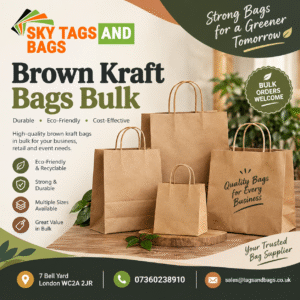
Packaging plays an important role in retail, hospitality, food service, events, and e-commerce. While businesses often focus on product presentation, the practical qualities of the packaging can be just as important. For many applications, paper bags provide a simple way to carry products while offering flexibility in size, storage, and branding.
As businesses look for packaging materials that balance functionality with changing environmental expectations, brown kraft bags bulk purchasing has become a practical consideration for retailers and organisations that use bags regularly.
Why Kraft Paper Bags Remain Popular
Kraft paper is widely used for packaging because it combines relatively low weight with useful strength and a natural appearance. Brown kraft paper also has a distinctive unbleached look that can suit businesses aiming for a simple, understated presentation.
The usefulness of kraft bags extends across many sectors, including:
- Independent retail shops
- Bakeries and food outlets
- Cafés and takeaway businesses
- Gift shops
- Clothing and fashion retailers
- Markets and events
- Promotional and corporate activities
- E-commerce order fulfilment
The correct bag specification depends on the products being carried. A lightweight bag may be suitable for clothing or small retail purchases, while heavier paper and reinforced handles can be more appropriate for denser items.
The Practical Advantages of Buying in Bulk
For businesses with consistent packaging requirements, kraft paper bags bulk purchasing can simplify stock management. Instead of ordering small quantities whenever supplies run low, businesses can maintain a planned packaging inventory.

Several practical benefits can come from this approach.
Improved stock planning: Regularly used bags can be incorporated into normal purchasing schedules, helping businesses anticipate future requirements.
Fewer urgent orders: Maintaining an appropriate reserve can reduce the risk of running out during busy trading periods.
Consistent packaging: Purchasing a suitable bag specification in larger quantities can help maintain consistency across different customer orders and locations.
Storage efficiency: When planned correctly, bulk packaging can be stored in a dedicated area and replenished as needed.
However, buying large quantities should not mean purchasing more than a business can reasonably store or use. Paper packaging needs to be kept dry and protected from excessive moisture, crushing, and contamination.
Choosing the Right Bulk Kraft Bags
Not every paper bag is suitable for every application. Before ordering bulk kraft bags, businesses should assess several factors.
1. Bag Size
The dimensions should accommodate the product without leaving excessive unused space. A bag that is too small may tear or become difficult to handle, while an unnecessarily large bag can use more material than required.
2. Paper Weight
Paper thickness affects durability and carrying performance. Heavier products generally require a stronger construction than lightweight retail goods.
3. Handle Design
Handle styles can influence both usability and appearance. Twisted paper handles, flat handles, or handleless formats may suit different retail environments.
4. Product Type
Food, clothing, cosmetics, books, gifts, and household products may all require different packaging characteristics. Consider weight, shape, potential leakage, and how the bag will be transported.
5. Storage Requirements
Businesses ordering kraft bags bulk should have sufficient dry storage space. Bags should generally remain protected from damp conditions and excessive pressure that could deform them.

Sustainability and Changing Packaging Expectations
Sustainability has become an increasingly visible consideration in packaging decisions. Businesses and consumers are paying more attention to material selection, recyclability, waste reduction, and responsible packaging practices.
Kraft paper is commonly associated with paper recycling streams, although the recyclability of a particular bag can depend on its construction, coatings, inks, handles, and local recycling facilities.
For this reason, businesses should look beyond the material name alone. A more responsible packaging approach can include selecting an appropriate bag size, avoiding unnecessary packaging, using bags efficiently, and checking disposal guidance relevant to the local area.
The natural appearance of brown paper can also support minimalist packaging designs. Some retailers choose to keep the plain kraft appearance, while others use printed logos, labels, stamps, or swing tags to provide product and brand information.
Common Challenges and How to Avoid Them
One common problem with bulk packaging is selecting a specification based only on price or appearance. A bag may look suitable but perform poorly if its dimensions or paper strength do not match the intended products.
A simple testing process can help. Before committing to a large quantity, businesses can assess:
- Whether the bag accommodates the product comfortably
- How the handles perform under normal loads
- Whether the base remains stable
- How the bag behaves during transport
- Whether the stored packaging remains in good condition
- Whether the material meets the organisation’s recycling objectives
Businesses researching packaging suppliers can also compare specifications carefully rather than relying solely on product names. For example, Tags and Bags provides different packaging formats that can help businesses identify options according to their particular retail requirements.
Where Bulk Kraft Paper Bags Can Be Used
The versatility of paper makes these bags suitable for numerous everyday applications. Retailers can use them for customer purchases, while cafés and food businesses may use suitable paper bags for takeaway items. Events, markets, craft businesses, and independent sellers can also use kraft packaging as part of their customer fulfilment process.

For businesses with predictable demand, bulk kraft paper bags can therefore become part of a structured packaging strategy rather than an occasional purchasing decision.
Conclusion
Choosing packaging effectively involves more than selecting a material. Businesses need to consider bag size, paper strength, handle design, storage conditions, product weight, usage frequency, and end-of-life considerations.
For organisations that use paper bags regularly, purchasing brown kraft bags bulk can support more organised stock management and consistent day-to-day packaging. The key is to match the bag specification to the actual application and avoid unnecessary quantities or unsuitable formats.
A well-planned packaging strategy can help businesses balance practicality, presentation, storage, and environmental considerations while providing customers with a functional way to carry