Subtotal $0.00

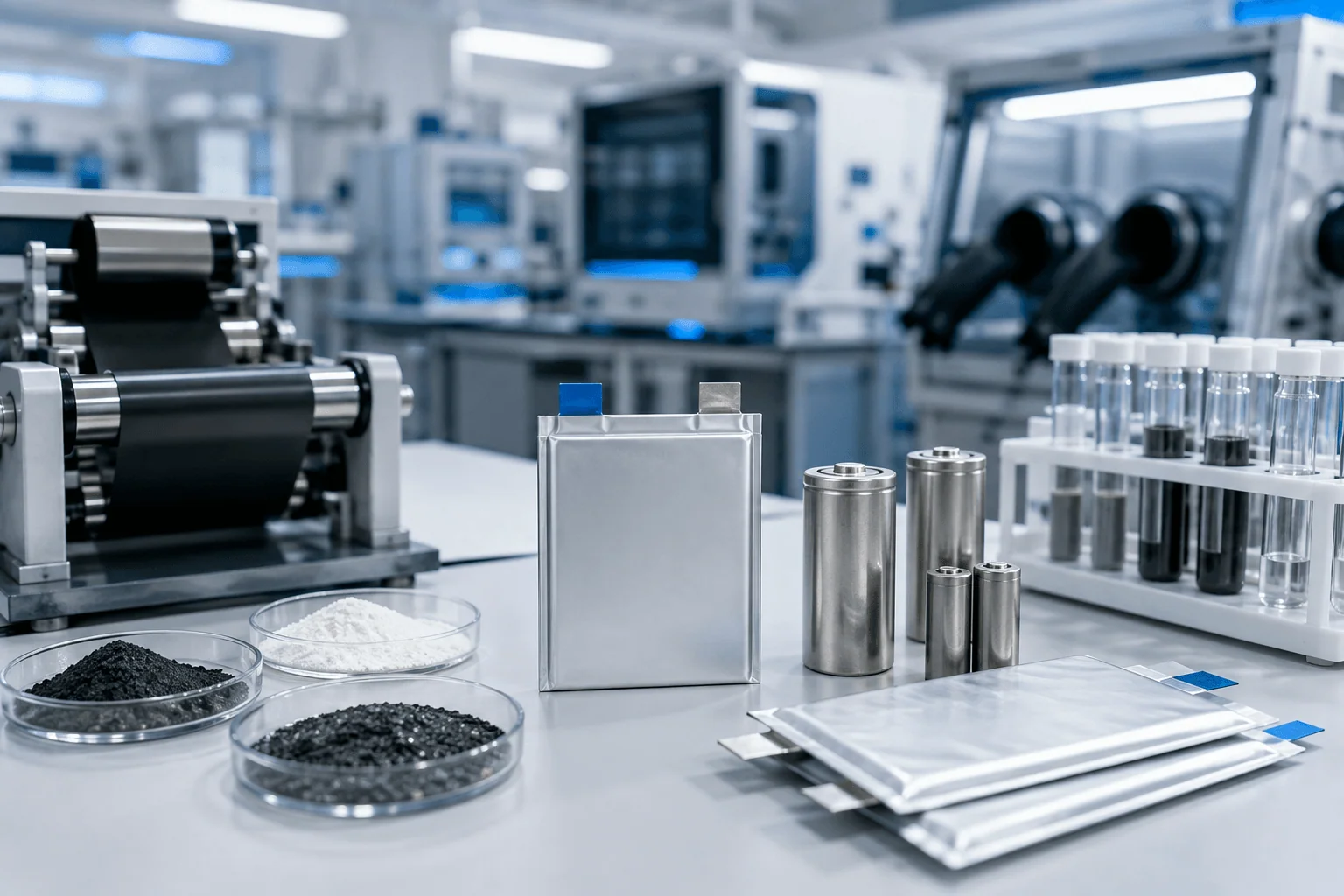
Developing next-generation batteries requires careful material selection, accurate testing, and a clear understanding of cell performance. Researchers and battery manufacturers must evaluate different electrode materials, electrolytes, and cell designs before moving toward larger-scale production. A reliable battery cell prototyping service can help make this development process more organized and efficient. Ampcera works in the advanced battery materials field, supporting research and development through specialized materials and technical services. Its work with solid-state battery materials, sulfide solid electrolytes, coated cathode materials, and dry electrode processing is relevant to teams exploring new battery technologies.
Understanding how prototyping works can help research teams identify material requirements, plan experiments, and evaluate promising battery designs.
What Is a Battery Cell Prototyping Service?
A battery cell prototyping service supports the development and evaluation of early-stage battery cells. It allows researchers to test a proposed cell design before investing in larger production volumes or extensive manufacturing infrastructure.
During prototyping, teams may investigate electrode formulations, electrolyte compatibility, cell construction, and electrochemical performance. The exact activities depend on the project, target application, available equipment, and technical requirements.
Prototyping can be useful for several battery technologies, including lithium-ion batteries and emerging solid-state battery systems.
Common objectives include:
- Evaluating new electrode materials.
- Investigating electrolyte performance and compatibility.
- Comparing different cell configurations.
- Identifying manufacturing challenges at an early stage.
- Collecting data to guide further research.
- Improving the repeatability of experimental procedures.
Rather than relying entirely on theoretical predictions, researchers can use prototype cells to observe how selected materials behave under defined test conditions.
Why Is Battery Cell Prototyping Important?
Battery performance depends on several interacting factors. A material that performs well in isolation may behave differently when combined with an electrode, electrolyte, separator, or other cell components.
Prototyping helps researchers examine these interactions in a controlled development environment.
1. Testing Material Compatibility
Material compatibility is an important consideration in battery development. Electrode materials and electrolytes must work together under the intended operating conditions.
Researchers can investigate potential interface issues, resistance, cycling behavior, and other performance indicators. The results can help determine whether a material combination deserves further development.
For solid-state batteries, the interface between the electrode and solid electrolyte is particularly important because it can influence ion transport and overall cell performance.
2. Comparing Cell Designs
Different cell configurations may produce different results, even when similar materials are used. Prototype development allows researchers to compare design choices and evaluate their practical implications.
For example, a team may examine changes in electrode composition, layer thickness, material processing, or cell assembly procedures. Controlled comparisons make it easier to understand which changes contribute to observed results.
3. Identifying Challenges Early
Manufacturing challenges can become expensive when discovered late in development. Prototype testing provides an opportunity to identify problems before a project advances toward larger production volumes.
Possible issues include inconsistent electrode quality, poor material contact, moisture sensitivity, and difficulties maintaining repeatable processing conditions.
Early identification does not eliminate every manufacturing risk, but it gives teams more opportunities to improve the design.
How Ampcera Contributes to Battery Research and Development?
Ampcera focuses on advanced battery materials and related technical capabilities. These areas are relevant to researchers working on solid-state batteries and other developing energy storage technologies.
Its portfolio includes sulfide solid electrolytes, coated cathode materials, dry electrode processing, electrolyte film services, and cold isostatic pressing services.
These capabilities can support different stages of material evaluation and battery research, depending on a project’s specific requirements.
Sulfide Solid Electrolytes
Solid electrolytes are an important component of solid-state battery research. Unlike conventional liquid electrolytes, they provide an ion-conducting solid material for use in a solid-state cell design.
Sulfide solid electrolytes attract research interest because of their potential for high ionic conductivity and their suitability for investigation in different solid-state battery configurations.
However, their performance depends on composition, processing, interfaces, and testing conditions. Researchers must also follow appropriate handling and storage procedures because many sulfide materials are sensitive to moisture and may release hazardous hydrogen sulfide gas when exposed to water.
Coated Cathode Materials
Cathode materials influence a battery’s capacity, voltage characteristics, and cycling behavior. Surface coatings are investigated to improve interface stability and manage unwanted reactions between battery components.
Ampcera offers coated cathode materials for advanced battery research. Depending on the selected material and coating system, researchers can evaluate how surface modification affects electrochemical behavior.
These evaluations require suitable controls and repeatable testing procedures. A coating should be assessed according to the requirements of the intended cell design rather than assumed to provide the same benefits in every application.
Dry Electrode Processing
Dry electrode processing is another area of interest in battery manufacturing research. It explores electrode production methods that reduce or eliminate the need for conventional solvent-based slurry processing.
Researchers may investigate electrode structure, material distribution, mechanical properties, and processing consistency. The suitability of a dry processing method depends on the materials, equipment, and performance targets involved.
For projects exploring alternative electrode manufacturing methods, this work can provide useful information about processing requirements and potential scale-up challenges.
Key Steps in Battery Cell Prototyping
A structured development process helps researchers organize experiments and make decisions based on measurable results.
Step 1: Define the Research Objective
Start by identifying what the prototype needs to demonstrate. The objective could involve evaluating a new electrolyte, comparing cathode materials, or studying the behavior of a solid-state cell.
Define measurable targets wherever possible, such as capacity retention, impedance, cycle life, or manufacturing consistency.
Step 2: Select Suitable Materials
Choose the electrode materials, electrolyte, and other cell components according to the research objective. Consider compatibility, processing requirements, availability, and storage conditions.
Material selection should be based on technical evidence and the intended application, not simply on individual material specifications.
Step 3: Plan the Processing Method
Determine how the materials will be prepared and assembled. Depending on the project, this stage may involve electrode preparation, coating, electrolyte film development, compaction, or other specialized procedures.
Document important processing parameters so that experimental results can be compared accurately.
Step 4: Assemble and Test Prototype Cells
After preparation, the cells can be assembled using suitable laboratory procedures and equipment. Testing should follow a defined protocol that reflects the project’s goals.
Researchers may examine initial capacity, charging and discharging behavior, impedance, cycling stability, and other relevant measurements.
Step 5: Analyze and Refine
Review the results to identify strengths, limitations, and possible causes of performance differences. Repeat experiments when necessary to determine whether the findings are consistent.
Use the collected data to decide whether to modify the material composition, adjust processing parameters, or investigate another cell design.
What Should You Look for in a Battery Prototyping Partner?
Selecting a suitable development partner requires more than comparing individual materials or advertised capabilities. Researchers should understand exactly which activities a provider can perform and how those activities match the project.
Consider the following factors:
- Technical capabilities: Confirm whether the provider offers the materials, processing methods, and equipment your project requires.
- Material specifications: Review available compositions, technical documentation, and relevant handling guidance.
- Testing requirements: Establish which performance measurements are needed and who will conduct them.
- Process repeatability: Ask how preparation conditions and experimental procedures are documented.
- Communication: Make sure technical requirements, deliverables, and timelines are clearly defined.
- Development goals: Confirm whether the work is intended for early research, material screening, prototype validation, or preparation for scale-up.
When evaluating a battery cell prototyping service, clarify the scope of work before beginning. Not every materials supplier provides complete cell assembly, testing, or independent performance validation.
This distinction helps research teams set realistic expectations and plan the remaining development activities.
Applications of Battery Cell Prototyping
Battery prototyping supports research across multiple sectors. The exact application determines which performance characteristics and testing conditions matter most.
Potential areas include:
- Electric vehicles: Investigating energy storage performance, charging behavior, durability, and safety requirements.
- Consumer electronics: Evaluating battery size, capacity, reliability, and packaging constraints.
- Grid energy storage: Studying cycle life, operational stability, and system-level requirements.
- Industrial equipment: Assessing battery performance under application-specific operating conditions.
- Advanced materials research: Comparing new electrolytes, cathodes, electrode structures, and interface treatments.
These applications have different priorities. A design intended for a compact electronic device may require different trade-offs from one developed for stationary energy storage.
Prototype testing helps researchers evaluate these trade-offs before committing to further development.
Frequently Asked Questions
What is the purpose of a battery cell prototype?
A prototype helps researchers evaluate a battery design, test material combinations, and identify technical challenges before larger-scale development. It provides experimental information that can guide subsequent design decisions.
Can prototyping support solid-state battery research?
Yes. Prototyping can support the evaluation of solid electrolytes, coated cathodes, electrode structures, and interfaces. The exact capabilities depend on the equipment, materials, and procedures available for the project.
How long does battery cell prototyping take?
The timeline varies according to material availability, cell design, processing complexity, testing duration, and the number of experimental iterations. Projects involving extended cycling tests may require substantially more time than initial material screening.
What information should researchers prepare before starting?
Researchers should prepare their project objectives, target cell configuration, preferred materials, testing requirements, expected deliverables, and relevant safety considerations. This information helps establish a practical scope of work.
Conclusion
Battery development involves many decisions, from selecting compatible materials to evaluating cell performance under controlled conditions. A structured prototyping process helps researchers collect useful experimental data, identify technical limitations, and refine promising designs before moving toward larger-scale manufacturing.
Ampcera’s work with sulfide solid electrolytes, coated cathode materials, dry electrode processing, and related battery research services is relevant to teams investigating advanced energy storage technologies.
Choosing a suitable battery cell prototyping service starts with clearly defined research goals, appropriate material selection, repeatable processing, and meaningful testing. By approaching development systematically, researchers can make better-informed decisions and build a stronger foundation for future battery innovation.