Subtotal $0.00

Choosing the right card weight can feel confusing when you are new to custom packaging. Numbers like 300gsm or 450gsm get thrown around, yet nobody explains what they mean for your box or your budget. Because of this, many UK brands order stock that is either too thin to protect the product or too heavy to be cost-effective. This packaging card gsm guide breaks the topic down in plain English, so you can order with confidence rather than guesswork.
Sky Print and Enterprise is a UK based manufacturer that works with growing brands and established retailers alike, and understanding card weight is often the first step toward better packaging. Once you know how GSM works, you can match it to your product, shipping method and finishing choices, and this packaging card gsm guide will show you exactly how. If you would rather skip ahead to samples, you can request your free custom packaging quote here and our team will recommend a suitable weight for your product.
What Does GSM Actually Mean In Packaging?
GSM stands for grams per square metre, and it measures how heavy, and therefore how thick, a sheet of packaging card is. A higher GSM number generally means a sturdier, more rigid board, while a lower number means a lighter, more flexible sheet. This single figure is one of the most useful shortcuts in the whole packaging card gsm guide, since it lets buyers compare materials from different suppliers on equal terms.
However, GSM is not the only factor that decides how strong a box feels. The type of fibre, the number of layers and the finishing all play a part too. For that reason, our full packaging materials guide is worth reading alongside this packaging card gsm guide, since it explains how weight and material type work together.
Why GSM Matters For UK Packaging Buyers
Getting the GSM wrong is one of the most common and costly packaging mistakes. Order too light, and your boxes may crush during transit or look cheap on a retail shelf. Order too heavy, and you pay more per unit than your product needs, which quickly eats into margins. Consequently, understanding this packaging card gsm guide before you place a bulk order can save both money and returns.
Furthermore, UK shipping conditions add another layer to consider. Courier handling, warehouse stacking and seasonal temperature changes all put extra strain on packaging. Therefore, brands selling online usually need a slightly heavier card than those selling only in-store, where handling is more controlled. Getting this balance right protects both your product and your reputation.
Common Packaging Card Weights And Where They Work Best
Different GSM ranges suit different jobs, and knowing the general bands from this packaging card gsm guide makes ordering far simpler.
- 150–250gsm suits lightweight items such as stickers, flyers and simple inserts.
- 250–350gsm works well for standard folding cartons, including many food and retail boxes.
- 350–450gsm is a popular mid-range choice for sturdier retail packaging and gift boxes.
- 450gsm and above moves into premium territory, often used for rigid boxes and luxury presentation.
For example, brands selling through our custom gift packaging range often choose the heavier end of the scale, since gift boxes are handled, opened and reused far more than a simple takeaway box. Meanwhile, everyday retail cartons can usually work well with a mid-range weight, keeping shipping costs sensible without sacrificing durability.
Matching GSM To Your Product Category
No single weight suits every industry, which is why matching GSM to product type matters so much. Food brands, for instance, need packaging that meets hygiene and grease-resistance needs alongside strength, so many of our custom food packaging customers choose a firm mid-to-high GSM board that holds its shape through transport and stacking.
On the other hand, cosmetic and skincare brands often prioritise a smooth, premium finish over sheer thickness, since their boxes usually travel by post rather than being stacked heavily in a warehouse. Similarly, retail packaging aimed at supermarket or boutique shelves needs enough rigidity to stand upright and stay crisp under store lighting. Because every category has different handling needs, it helps to speak with a packaging specialist before finalising your GSM, rather than picking a number at random. This is exactly where a clear packaging card gsm guide turns industry guesswork into a repeatable decision.
GSM Versus Other Packaging Materials
Following this packaging card gsm guide closely, it is worth noting that GSM applies specifically to folding carton and card stock, while other materials are measured differently. Corrugated board, for example, is usually described by flute type and layer count rather than GSM alone, since its strength comes from the fluted middle layer. If you are torn between card and corrugated, our corrugated packaging material guide explains when each option performs better.
Kraft board is another popular choice among sustainability-focused brands, and it comes in its own weight ranges suited to eco-friendly packaging. Our kraft board material guide covers this in more detail. For heavier, presentation-first packaging, rigid boxes use a completely different construction method, built around a solid greyboard core rather than a single folded sheet, and our rigid board material guide walks through how that changes strength and cost. Meanwhile, if standard folding cartons suit your product best, our folding carton material guide shows typical GSM bands used across the UK market.
How Finishing Choices Interact With Card Weight
Once you settle on a GSM using this packaging card gsm guide, finishing decisions can still change how the final box feels and performs. Lamination, for instance, adds a thin protective layer that can make a mid-weight card feel noticeably more premium, while spot UV or foiling draws attention to specific design elements without adding real bulk. Our luxury packaging finishes guide covers these options in depth, including which finishes pair best with lighter versus heavier stock.
In addition, printing method plays a role too, since some techniques suit textured, heavier boards better than others. Our printing methods guide explains which processes work best across different card weights, so your artwork prints cleanly regardless of the GSM you choose.
Sustainability And Practical Ordering Tips
Sustainability is now a genuine priority for UK shoppers, and this packaging card gsm guide would be incomplete without covering it, since card weight plays a part here too. Choosing an appropriately sized GSM, rather than automatically defaulting to the heaviest option, reduces material waste while still protecting the product properly. Recyclable and FSC-certified stocks are widely available across most GSM ranges, so brands rarely need to compromise on either strength or environmental responsibility.
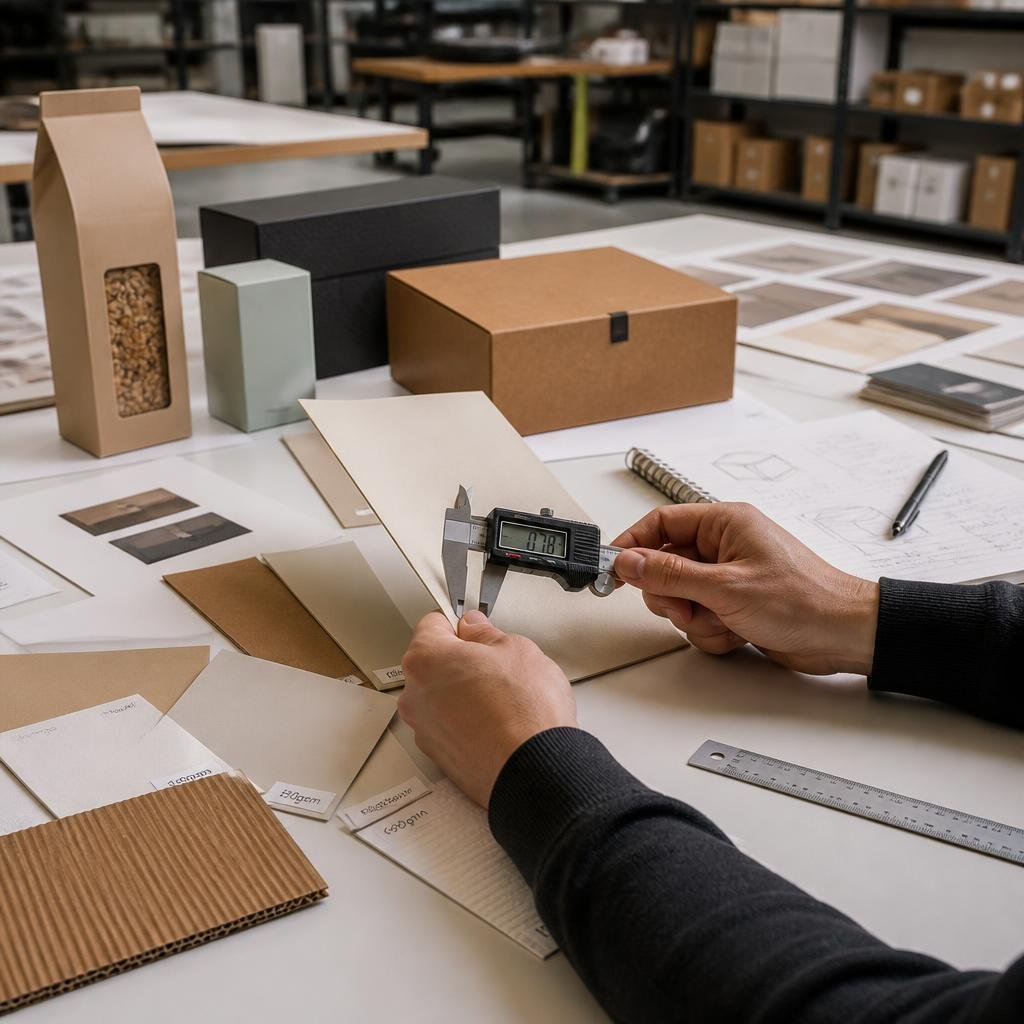
Before placing a bulk order, it also helps to request physical samples in a few different weights, as recommended throughout this packaging card gsm guide. Handling the card yourself, rather than judging purely from a spec sheet, often makes the final decision far easier. Our packaging design guide and broader printing and packaging guide both offer further reading if you want to explore structural design alongside material choice.
Bringing It All Together
Selecting the right card weight does not need to be complicated once you understand what GSM represents and how it interacts with material type, product category and finishing. This packaging card gsm guide has walked through the basics, the common weight bands and the practical trade-offs UK brands face when ordering custom boxes. Whether you run a small food business, a cosmetic label or a retail brand, matching GSM to your actual handling conditions will save money and reduce damaged deliveries in the long run.
Our team regularly helps businesses across the UK translate this packaging card gsm guide into a real specification sheet, factoring in shipping method, budget and branding goals. Beyond card weight, our wider custom packaging solutions and custom printing services can help bring the rest of your project together, from structural design through to finishing.
If you sell through supermarkets, boutiques or online stores, our retail packaging range and cosmetic packaging range show real examples of GSM applied across different industries, which can be a useful reference point while you plan your own order.
Ready to see samples in your hands rather than just numbers on a screen? Get your free custom quote and sample recommendation today and let our specialists match the right GSM to your product before you commit to a full production run.
Still unsure which weight suits your brand, or want a second opinion before ordering? Speak with our packaging specialists and get a tailored recommendation before your next print run goes ahead.
Frequently Asked Questions
What GSM is best for a standard retail box?
Most standard retail cartons perform well between 300gsm and 400gsm, offering a good balance of rigidity and cost for shelf display.
Is a higher GSM always better for packaging?
Not necessarily. A higher GSM adds strength and a premium feel, but it also increases material cost and shipping weight, so it should match your actual product needs.
Can I mix GSM card with lamination or foiling?
Yes, most GSM ranges accept lamination, foiling and spot UV finishing, though heavier stock generally holds detailed finishes more cleanly.
Does GSM apply to corrugated boxes as well?
Not directly. Corrugated board is usually measured by flute profile and layer construction rather than a single GSM figure, since its strength comes from the fluted layer.
How do I know which GSM suits my product before ordering in bulk?
Requesting physical samples in two or three weights, alongside advice from your packaging supplier, is the most reliable way to confirm the right choice before a full production run.