Subtotal $0.00

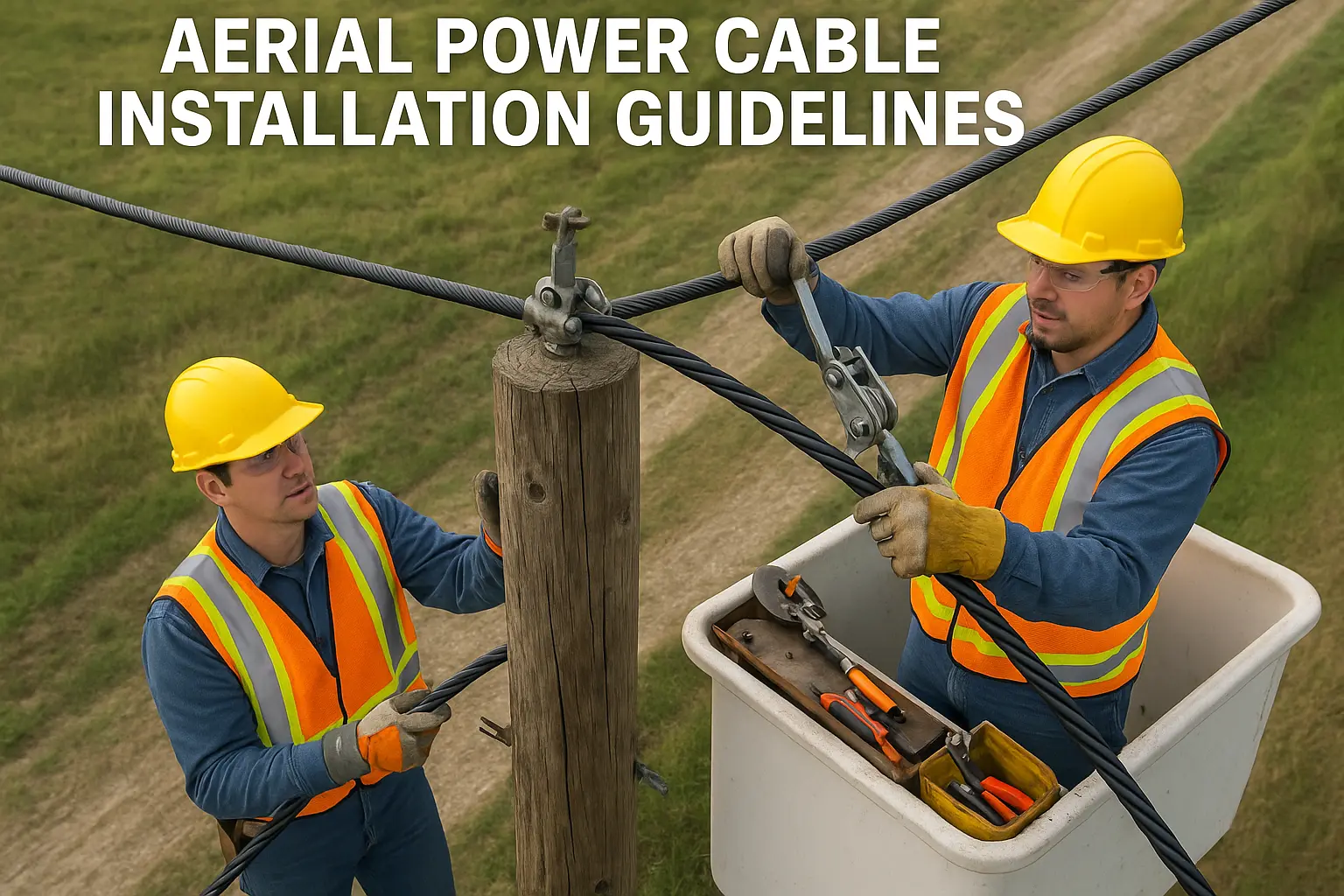
An aerial power cable is a critical component in overhead power transmission and distribution networks. Designed to carry electrical energy across distances without underground installation, these cables are widely used by utilities, EPC contractors, and industrial developers seeking cost-effective, flexible, and scalable power solutions.
As global demand for reliable electricity infrastructure continues to grow, aerial cable systems have become essential for urban expansion, rural electrification, and industrial development. At HNBF Power, we specialize in manufacturing high-performance aerial power cables engineered to meet international standards and demanding project conditions.
What is an Aerial Power Cable?
An aerial power cable refers to insulated or bare conductors installed above ground, typically supported by poles or towers. These cables are designed to deliver electricity efficiently while withstanding environmental stresses such as wind, temperature variations, and mechanical tension.
Key Types of Aerial Power Cables
- AAC (All Aluminum Conductor) – Ideal for short-distance transmission with high conductivity
- AAAC (All Aluminum Alloy Conductor) – Offers improved strength and corrosion resistance
- ACSR (Aluminum Conductor Steel Reinforced) – Combines high tensile strength with excellent conductivity
- ABC (Aerial Bundled Cable) – Insulated cables designed for safety and reduced power losses
HNBF Power manufactures a complete range of these aerial cable solutions to support diverse project requirements.
Why Aerial Power Cables Are Preferred in Modern Projects
Cost-Effective Installation
Compared to underground cables, aerial power cables require significantly lower installation costs. There is no need for trenching, complex civil works, or expensive insulation systems, making them ideal for large-scale infrastructure projects.
Faster Deployment
Time-sensitive projects benefit from the quick installation of aerial systems. Utilities and contractors can deploy overhead lines rapidly, ensuring faster electrification and reduced project timelines.
Easy Maintenance and Accessibility
Aerial cables are easier to inspect and maintain. Fault detection, repair, and upgrades can be performed without extensive excavation, minimizing downtime and operational costs.
Engineering Advantages of HNBF Power Aerial Cables
High Conductivity and Efficiency
HNBF Power aerial power cables are engineered using high-purity aluminum and advanced alloy materials. This ensures optimal conductivity, reduced transmission losses, and improved system efficiency.
Superior Mechanical Strength
Our ACSR and AAAC cables are designed to handle high tensile loads, making them suitable for long spans and challenging terrains such as mountainous or coastal regions.
Weather and Corrosion Resistance
Environmental durability is a key requirement for overhead systems. HNBF Power cables are manufactured with corrosion-resistant materials, ensuring long-term performance even in harsh climates.
Compliance with International Standards
All products are produced in accordance with IEC, ASTM, and BS standards, ensuring reliability, safety, and global compatibility for power transmission projects.
Common Applications of Aerial Power Cables
Urban Power Distribution
Aerial bundled cables (ABC) are widely used in cities to reduce power theft, improve safety, and minimize outages caused by external interference.
Rural Electrification
In remote areas, aerial power cables provide an economical solution for extending electricity access without the high costs of underground systems.
Industrial and Commercial Projects
Factories, construction sites, and commercial developments rely on aerial systems for temporary and permanent power supply solutions.
Utility Transmission Networks
High-capacity ACSR and AAAC conductors are essential for medium and high-voltage transmission lines, ensuring reliable energy delivery across long distances.
Key Considerations When Choosing an Aerial Power Cable
Load Capacity Requirements
Understanding the electrical load is crucial. Selecting the right conductor type and size ensures safe and efficient power transmission.
Environmental Conditions
Factors such as temperature, humidity, wind load, and pollution levels must be considered when choosing cable materials and design.
Installation Environment
Urban, rural, or industrial settings each require different cable configurations. For example, ABC cables are ideal for densely populated areas due to their insulated design.
Long-Term Cost Efficiency
While initial costs are important, long-term performance, maintenance, and durability should guide procurement decisions.
HNBF Power works closely with clients to evaluate these factors and recommend the most suitable aerial cable solution for their projects.
How HNBF Power Solves Industry Challenges
Reducing Power Losses
Through advanced conductor design and material optimization, HNBF Power minimizes energy losses, improving overall system efficiency.
Enhancing Safety
Our insulated aerial bundled cables reduce the risk of electrical hazards, making them ideal for residential and urban installations.
Supporting Large-Scale Projects
With robust manufacturing capacity and strict quality control, HNBF Power ensures consistent supply for large infrastructure and EPC projects worldwide.
Custom Engineering Solutions
Every project has unique requirements. HNBF Power provides customized cable designs, including specific conductor sizes, insulation types, and performance specifications.
FAQs About Aerial Power Cable
What is the difference between aerial and underground cables?
Aerial power cables are installed above ground on poles or towers, while underground cables are buried. Aerial systems are more cost-effective and easier to maintain.
Which aerial cable is best for urban areas?
Aerial Bundled Cable (ABC) is the preferred choice for urban environments due to its insulated design and enhanced safety.
How long do aerial power cables last?
With proper installation and maintenance, high-quality aerial cables can last 30–40 years or more.
Are aerial power cables safe?
Yes, especially insulated types like ABC cables, which reduce the risk of electrical accidents and power theft.
Can aerial cables be customized for specific projects?
Absolutely. Manufacturers like HNBF Power offer tailored solutions based on voltage, load capacity, and environmental conditions.
Conclusion
Aerial power cables remain a cornerstone of modern power distribution systems due to their cost efficiency, reliability, and adaptability. Whether for urban infrastructure, rural electrification, or industrial applications, choosing the right cable solution is critical for long-term performance.
HNBF Power stands out as a trusted global manufacturer, delivering high-quality aerial cable solutions designed to meet the evolving demands of the power industry.
Get in Touch with HNBF Power
Looking for a reliable partner for your next power transmission project? Contact HNBF Power today to discuss your requirements and get customized aerial power cable solutions tailored to your specific needs.