Subtotal $0.00

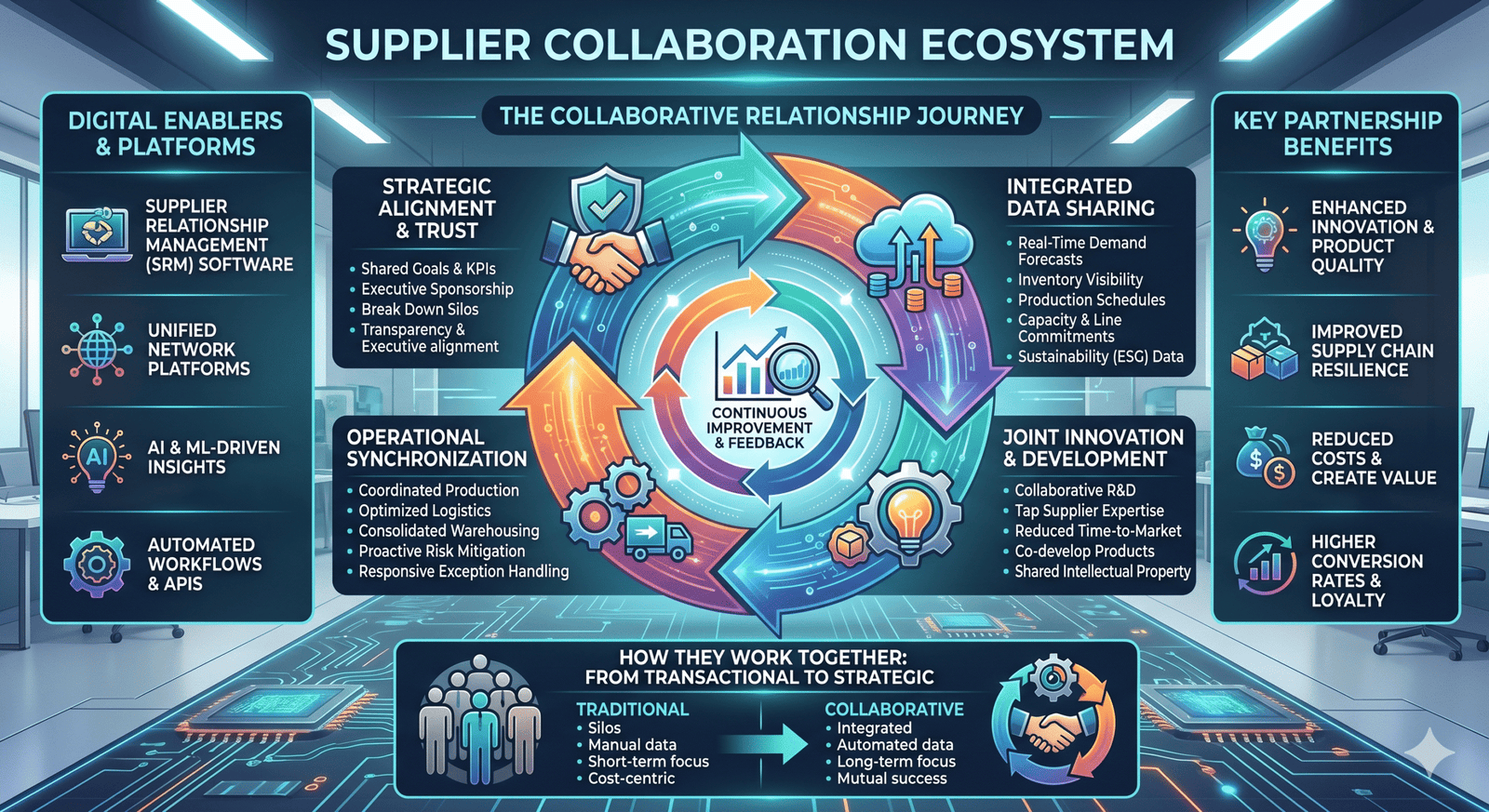
Supply chains have become more complex, interconnected, and data-driven than ever before. Businesses are no longer operating in isolated environments. Instead, they are part of extended networks that include suppliers, distributors, and logistics partners.
In this evolving landscape, supplier collaboration has moved from being a tactical necessity to a strategic advantage. The ability to share data, align operations, and work transparently with suppliers is critical for improving efficiency, reducing costs, and responding quickly to market changes.
As data becomes more central to decision-making, collaboration is no longer optional. It is essential for building resilient and high-performing supply chains.
The Shift Toward Transparent Supply Chains
Traditional supply chains often lacked visibility. Retailers and suppliers operated independently, with limited insight into each other’s operations. This approach created delays, inefficiencies, and misalignment.
Today, transparency is becoming a key requirement. Businesses need real-time visibility into:
- Inventory levels
- Demand forecasts
- Production schedules
- Shipment status
This shift is driven by increasing customer expectations and the need for faster, more reliable operations.
Supplier collaboration plays a central role in enabling this transparency.
What is Supplier Collaboration?
Supplier collaboration refers to the process of working closely with suppliers to share information, align strategies, and achieve common goals. It goes beyond transactional relationships and focuses on building long-term partnerships.
Key aspects of supplier collaboration include:
- Data sharing
- Joint planning
- Communication and coordination
- Performance tracking
The objective is to create a connected ecosystem where all parties operate with the same information.
Why Data Sharing is Critical
Data is the foundation of modern supply chains. Without access to accurate and timely data, decision-making becomes reactive and inefficient.
Sharing data between businesses and suppliers enables:
- Better demand forecasting
- Improved production planning
- Faster response to changes
- Reduced uncertainty
For example, when suppliers have visibility into real-time sales data, they can adjust production and delivery schedules accordingly.
Benefits of Supplier Collaboration
Improved Forecast Accuracy
Collaborative planning allows businesses and suppliers to align on demand expectations, reducing forecasting errors.
Faster Inventory Turnover
Better coordination leads to quicker replenishment cycles, improving inventory efficiency.
Reduced Lead Times
Transparent communication helps streamline production and delivery processes.
Lower Costs
Optimized operations reduce waste, storage costs, and inefficiencies.
Enhanced Agility
Collaborative supply chains can respond quickly to market changes and disruptions.
Stronger Relationships
Building trust and transparency leads to long-term partnerships and mutual growth.
Key Use Cases
Collaborative Demand Planning
Retailers share demand forecasts with suppliers, enabling them to plan production more effectively.
Promotion Alignment
During promotional campaigns, suppliers are informed in advance, ensuring that inventory levels are sufficient.
Inventory Visibility
Suppliers gain visibility into inventory levels across locations, allowing better allocation and replenishment.
New Product Launches
Close collaboration ensures that suppliers can meet demand during product launches.
The Role of Technology in Supplier Collaboration
Technology is a key enabler of modern supplier collaboration. Digital platforms allow businesses to share data, communicate in real time, and automate processes.
Key capabilities include:
- Real-time data sharing
- Inventory tracking
- Demand forecasting tools
- Workflow automation
These tools help create a seamless flow of information across the supply chain.
The Importance of Trust and Transparency
Successful supplier collaboration depends on trust. Without trust, suppliers may hesitate to share data or align closely with business goals.
Transparency plays a crucial role in building trust. When both parties have access to the same information, it reduces uncertainty and improves decision-making.
Businesses can build trust by:
- Communicating openly
- Sharing relevant data
- Aligning incentives
- Maintaining consistent engagement
Challenges in Supplier Collaboration
Data Silos
Fragmented data across systems can limit visibility and hinder collaboration.
Technology Gaps
Incompatible systems can make data sharing difficult.
Misaligned Objectives
Differences in priorities between businesses and suppliers can create conflicts.
Resistance to Change
Organizations may be hesitant to adopt new processes or technologies.
Data Security Concerns
Sharing data requires strong security measures to protect sensitive information.
Addressing these challenges is essential for effective collaboration.
Best Practices for Effective Collaboration
Establish Clear Goals
Define shared objectives to ensure alignment between all parties.
Invest in Technology
Use platforms that enable real-time data sharing and integration.
Standardize Processes
Consistent workflows improve efficiency and reduce confusion.
Foster Strong Relationships
Regular communication helps build trust and strengthen partnerships.
Monitor Performance
Track key metrics such as lead times and order accuracy to measure success.
The Role of AI and Analytics
Artificial intelligence and analytics enhance supplier collaboration by providing deeper insights and predictive capabilities.
They enable:
- Demand forecasting
- Risk identification
- Performance optimization
- Scenario planning
These capabilities help businesses and suppliers make better decisions and improve outcomes.
The Future of Supplier Collaboration
Supplier collaboration is evolving with advancements in technology and data integration. Future trends include:
- Real-time supply chain visibility
- AI-driven decision-making
- Integration across supplier networks
- Increased focus on sustainability
These developments will make supply chains more efficient, transparent, and resilient.
Conclusion
Supplier collaboration is essential in the age of data sharing and transparency. By working closely with suppliers and leveraging real-time data, businesses can improve efficiency, reduce costs, and respond faster to market changes.
In a competitive environment, the ability to collaborate effectively across the supply chain is a key differentiator. Organizations that prioritize supplier collaboration will be better positioned to build resilient operations and achieve long-term success.