Subtotal $0.00

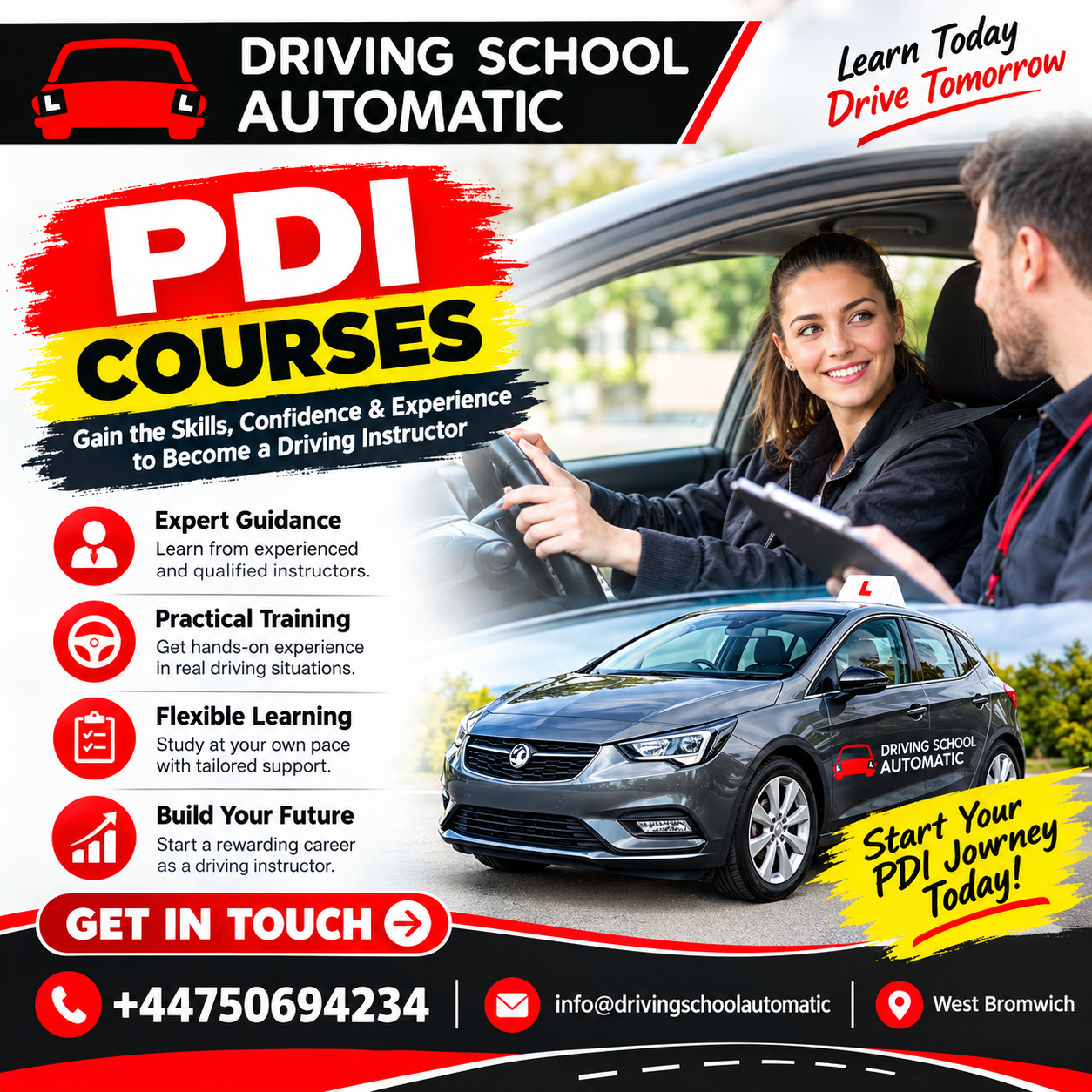
Becoming a driving instructor can be a rewarding career for people who enjoy driving, teaching, and helping others develop valuable life skills. However, moving from an experienced driver to a qualified instructor requires more than confidence behind the wheel. It involves professional training, a strong understanding of road safety, effective communication, and the ability to guide learners through different driving situations.
For people exploring PDI training Wednesbury West Bromwich, understanding the qualification process is an important first step. Potential driving instructors need to learn how to teach safely, assess driving performance, explain complex road situations, and help learners build confidence at their own pace.
The West Midlands offers a variety of road environments that can support instructor development, from residential streets and busy junctions to roundabouts and higher-speed roads. With appropriate training and preparation, aspiring instructors can work towards developing the knowledge and practical skills required for a professional career in driver education.
Understanding PDI Training and the Driving Instructor Qualification Process
PDI stands for Potential Driving Instructor. In the UK, this term generally refers to someone working towards becoming an Approved Driving Instructor (ADI), the recognised professional qualification for car driving instructors.
The qualification process is regulated by the Driver and Vehicle Standards Agency (DVSA). Candidates must meet the relevant eligibility requirements and pass the required assessments before becoming fully qualified.
The main stages of the process include:
- Part 1: Theory test. Candidates demonstrate their knowledge of road traffic rules, driving theory, and hazard perception.
- Part 2: Driving ability test. Candidates demonstrate a high standard of driving ability, vehicle control, and awareness of road conditions.
- Part 3: Instructional ability test. Candidates demonstrate their ability to teach a learner driver safely and effectively.
Candidates who meet the applicable requirements may be eligible to apply for a trainee licence after passing the relevant earlier stages. This licence allows eligible candidates to gain practical teaching experience under the conditions established by the DVSA.
Understanding these stages helps prospective instructors plan their preparation realistically. Each assessment requires a different combination of knowledge, practical ability, and teaching skill.
It is also important to check the latest DVSA guidance before beginning training, as eligibility rules, test procedures, and application requirements should always be confirmed through official sources.
Why Local Knowledge Matters for PDI Training in Wednesbury West Bromwich
Local road knowledge can be valuable when preparing to teach learner drivers. PDI training Wednesbury West Bromwich provide a range of everyday traffic situations that aspiring instructors may need to understand and explain clearly.
Busy urban roads can involve changing speed limits, pedestrian crossings, parked vehicles, traffic signals, and complex junction layouts. Residential areas introduce different challenges, including restricted visibility, meeting oncoming traffic, and identifying potential hazards around parked cars.
For a potential driving instructor, these situations are useful opportunities to develop teaching techniques alongside driving knowledge.
Developing skills in different road environments
An effective training programme should help candidates understand how to approach different road conditions, including:
- Junctions and roundabouts: Explaining observation, positioning, signalling, and safe decision-making.
- Urban traffic: Managing traffic flow, anticipating the actions of other road users, and maintaining appropriate separation distances.
- Residential streets: Recognising hazards involving pedestrians, cyclists, parked vehicles, and limited visibility.
- Higher-speed roads: Understanding speed management, safe following distances, and the importance of planning ahead.
- Independent driving: Helping learners make decisions while following directions or navigating to a destination.
These skills are relevant to instructor development because a driving instructor must do more than perform a manoeuvre correctly. They must also explain why a particular action is appropriate and help learners recognise when similar decisions may be required elsewhere.
Local familiarity can also help instructors understand the needs of learners who regularly drive around Wednesbury, West Bromwich, and neighbouring communities.
Essential Skills Every Aspiring Driving Instructor Should Develop
Passing the required assessments is an important milestone, but effective instruction also depends on a broader set of professional skills.
A successful instructor needs to communicate clearly, recognise individual learning needs, and create an environment where learners can ask questions and learn from mistakes.
1. Clear communication
Learners may struggle to understand technical driving terminology, particularly during their first lessons. Instructors should explain concepts in simple language, introduce information at an appropriate pace, and check whether the learner understands the instruction.
For example, instead of giving several complicated directions immediately before a junction, an instructor can explain the relevant observations and positioning early enough for the learner to respond safely.
2. Risk awareness and hazard management
Professional instructors need to identify developing hazards and understand when intervention may be necessary. This includes monitoring traffic, pedestrians, cyclists, road conditions, and the learner’s behaviour.
Risk management also involves selecting appropriate routes and adjusting lesson difficulty according to the learner’s current ability.
3. Lesson planning
Structured lessons help learners progress from basic vehicle control to more complex driving situations. Instructors should identify learning objectives, assess existing skills, provide opportunities for practice, and review performance at the end of each session.
A clear lesson structure makes it easier to identify weaknesses and determine which skills require further attention.
4. Constructive feedback
Feedback should explain what went well, what needs improvement, and how the learner can make progress. Rather than focusing only on errors, instructors should encourage learners to understand the reasons behind their decisions.
This approach can support confidence while maintaining appropriate standards of safety and performance.
5. Patience and adaptability
Different learners progress at different rates. Some may need additional practice with clutch control or manoeuvres, while others may require more support with traffic awareness or independent decision-making.
Adapting the teaching approach to the learner’s needs is an essential part of professional instructor development.
Common Challenges During PDI Training and How to Overcome Them
Many aspiring instructors discover that teaching driving requires a different mindset from driving independently. Recognising common difficulties early can make preparation more focused and effective.
Balancing driving ability with teaching ability
Experienced drivers may assume that strong driving skills automatically translate into effective instruction. However, explaining a decision while monitoring a learner and assessing surrounding traffic requires additional practice.
Practical solution: Practise explaining driving decisions aloud during appropriate training exercises. Describe what you observe, the risks you identify, and the reasoning behind your actions. Structured feedback from a qualified trainer can help identify gaps in both driving and instructional technique.
Preparing for theory and hazard perception
The theory assessment requires more than memorising road signs. Candidates need to understand how road safety principles apply to real situations and recognise developing hazards.
Practical solution: Use current official learning resources, complete regular practice questions, and review incorrect answers carefully. For hazard perception, focus on recognising changes in road conditions and the behaviour of other road users.
Managing nerves during assessments
Assessment pressure can affect concentration and communication, even when candidates have prepared thoroughly.
Practical solution: Practise under realistic conditions, become familiar with the assessment format, and identify areas of weakness before booking a test. A training log can help track progress and provide a clearer picture of readiness.
Understanding the business side of instruction
Professional PDI training Wednesbury West Bromwich can also involve scheduling lessons, maintaining records, managing customer enquiries, and understanding the costs associated with operating a business.
Practical solution: Research the financial and administrative responsibilities of self-employment alongside practical training. Consider vehicle suitability, insurance, fuel, maintenance, professional development, and the time required to manage bookings.
These steps help aspiring instructors make informed decisions about whether the profession suits their circumstances and long-term goals.

Choosing an Appropriate PDI Training Provider
Selecting a training provider is an important decision for anyone considering a career in driver education. The right programme should support both assessment preparation and the development of practical teaching skills.
Before committing to a course, prospective instructors should consider several factors.
Training structure: Ask how the programme covers the theory, driving ability, and instructional ability assessments, including how progress is monitored.
Trainer experience: Establish the qualifications and relevant experience of the people delivering the training. Ask how feedback is provided and whether individual learning needs are considered.
Practical experience: Find out how much supervised practice is available and how the training develops skills in different road environments.
Costs and commitments: Request a clear explanation of course fees, assessment costs, additional lessons, and any other charges. Check cancellation policies and payment arrangements before signing an agreement.
Flexibility: Consider whether lesson times and study arrangements fit around existing employment or family responsibilities.
Official requirements: Confirm that the proposed training route aligns with current DVSA rules. Avoid relying solely on marketing claims when checking eligibility, qualification requirements, or trainee licensing arrangements.
People researching local options may encounter providers such as Driving School Automatic in West Bromwich. Comparing the available training arrangements, asking detailed questions, and verifying qualifications can help candidates determine whether a particular provider meets their needs.
The aim should be to find a programme that develops genuine competence rather than focusing exclusively on passing assessments.
Career Opportunities and Long-Term Development for Driving Instructors
Becoming an ADI can offer several potential career paths. Qualified instructors may choose to work independently, join an established driving school, or explore opportunities to specialise in particular areas of driver education where appropriate qualifications and experience are available.
Self-employed instructors often have greater control over scheduling, but they also need to manage their business responsibilities. Those working with established schools may benefit from existing administrative systems and a more structured working arrangement.
Long-term success depends on maintaining professional standards, keeping knowledge current, and responding to changes in road safety guidance, vehicle technology, and learner expectations.
Electric vehicles and modern driver-assistance systems are increasingly relevant to driver education. Instructors should understand how these technologies affect vehicle operation while ensuring that learners continue to develop sound observation, judgement, and hazard-awareness skills.
Continuing professional development can also help instructors improve their teaching methods, review challenging situations, and maintain confidence in their professional abilities.
For anyone considering PDI training Wednesbury West Bromwich, it is worth viewing qualification as the beginning of a professional learning journey rather than the final destination.
Conclusion
Becoming a driving instructor requires a combination of driving competence, teaching ability, road safety awareness, and professional responsibility. Understanding the DVSA qualification process, preparing systematically for each assessment, and developing strong communication skills can help aspiring instructors approach the journey with greater confidence.
Local road environments in Wednesbury and West Bromwich offer useful contexts for understanding the practical challenges learners face. However, successful instructor development also depends on structured training, regular feedback, realistic preparation, and a clear understanding of professional responsibilities.