Subtotal $0.00

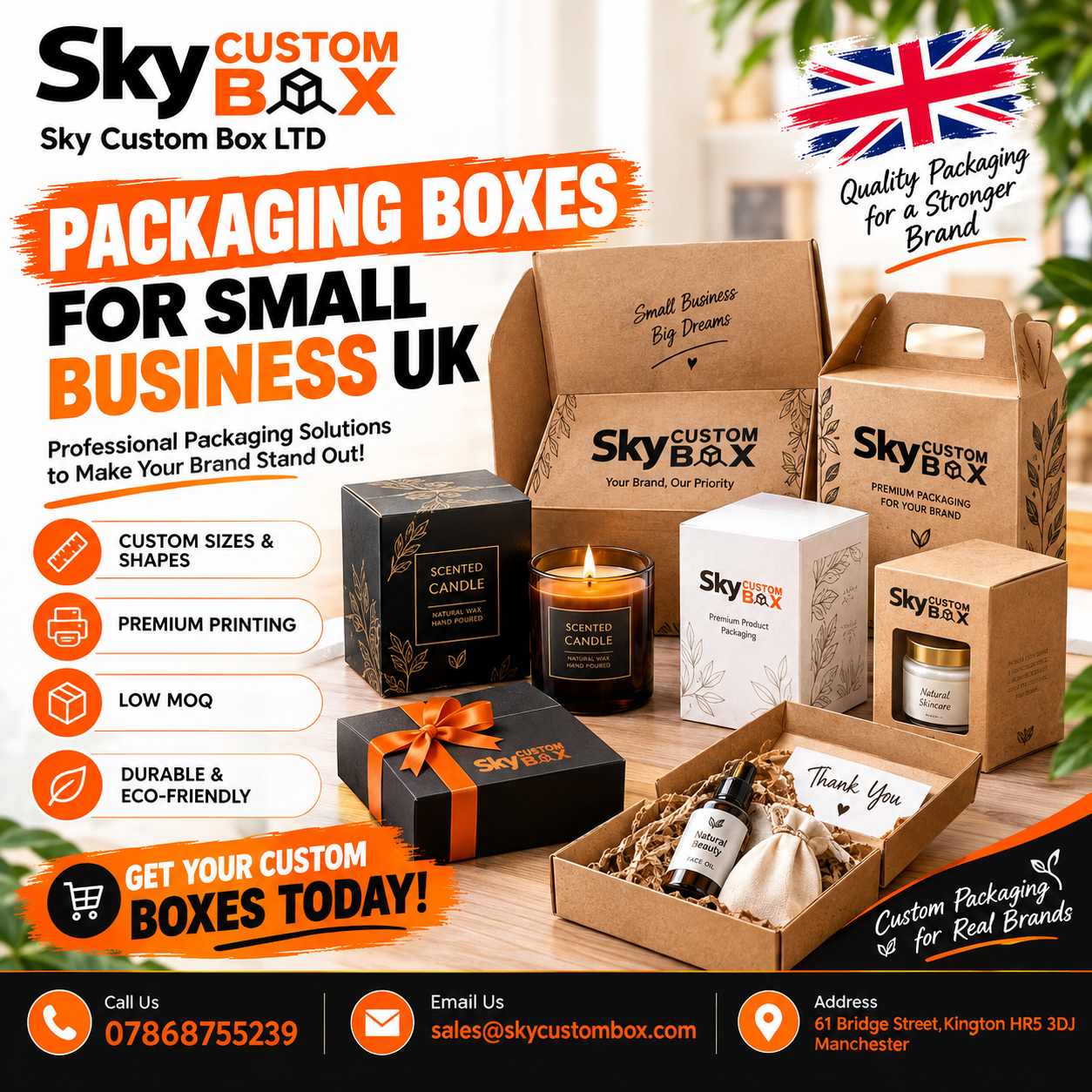
Packaging is often the first physical interaction a customer has with a brand. Before a product is opened or used, its box can communicate quality, attention to detail, and the values behind the business. For online retailers, gift shops, cosmetics companies, bakeries, and independent product makers, well-designed personalised packaging boxes offer a practical way to protect products while creating a more recognisable customer experience.
Modern packaging serves several purposes beyond presentation. It can reduce product damage, improve storage efficiency, support marketing efforts, and provide essential information about the contents. However, selecting the right packaging requires careful consideration of materials, dimensions, printing methods, order quantities, and overall costs.
Understanding these factors helps businesses choose packaging that meets customer expectations without introducing unnecessary complexity into their operations.
Read More:
https://www.skycustombox.com/blog/
1. What Are Personalised Packaging Boxes and Why Do They Matter?
Personalised packaging boxes are boxes adapted to a business’s products and brand identity. Personalisation may include a company logo, brand colours, printed messaging, product information, illustrations, or a specific box structure.
Unlike plain stock packaging, customised solutions allow businesses to create a more consistent appearance across their product range.
Building Brand Recognition
Consistent packaging can make products easier to recognise across online orders, retail shelves, and gift purchases. Repeated use of brand colours, typography, and logo placement helps establish a visual identity.
For example, a skincare company might use clean typography and muted colours to communicate simplicity, while a premium confectionery brand could choose decorative printing and structured gift boxes.
The design should reflect the product and intended audience rather than relying on expensive finishes alone. A straightforward, well-balanced design can often communicate quality more effectively than a box crowded with graphics.
Improving the Customer Experience
Packaging also influences how customers handle, open, store, and reuse products. Easy-to-open closures, secure inserts, and appropriately sized compartments can make a product more convenient to use.
For gift products, printed messages and coordinated internal presentation may add value without changing the product itself.
Businesses should remember that personalisation must remain practical. A visually attractive box that is difficult to open or fails to protect its contents may create a negative impression rather than a positive one.
2. Choosing Materials for Customised Packaging Boxes
Material selection affects a box’s strength, appearance, printing quality, environmental impact, and cost. The appropriate material depends on the product’s weight, fragility, value, and intended delivery method.
Corrugated Cardboard
Corrugated cardboard contains a fluted layer between paper liners, helping provide strength and cushioning. It is widely used for shipping cartons, e-commerce orders, subscription boxes, and products that need protection during transportation.
Its advantages include:
- Good structural strength for many shipping applications.
- Availability in different thicknesses and constructions.
- Compatibility with various printed designs.
- Options for flat storage and efficient assembly.
- Suitability for many paper recycling systems, depending on the material and local facilities.
For fragile products, the box should be combined with suitable inserts or cushioning rather than relying on cardboard strength alone.
Read More:
Paperboard and Folding Cartons
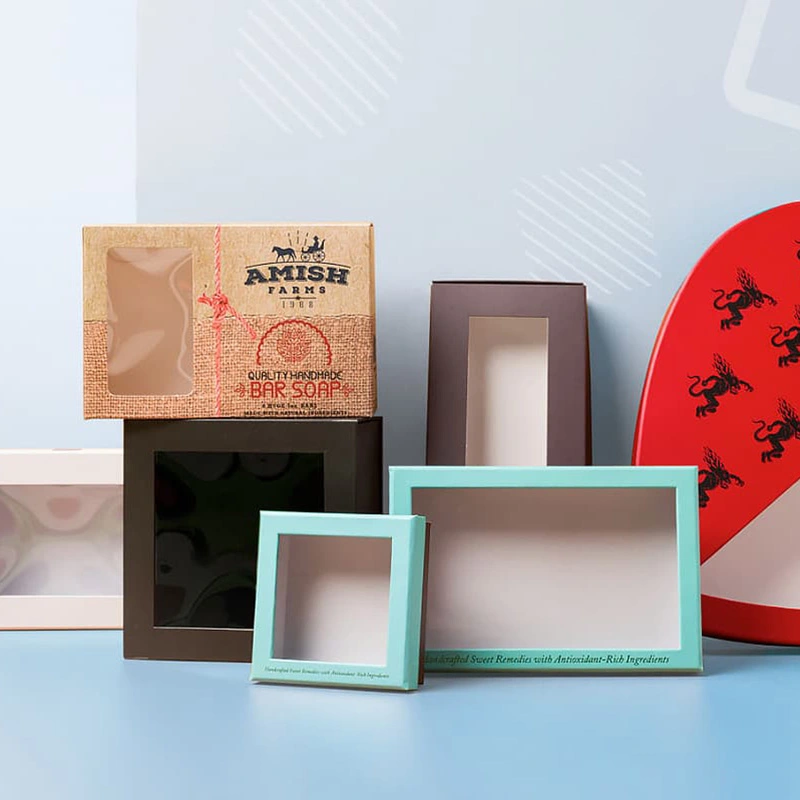
Paperboard is commonly used for retail packaging where presentation and print quality are important. Folding cartons are supplied flat and assembled when required, which can help businesses save storage space.
These boxes are suitable for cosmetics, candles, confectionery, stationery, accessories, and lightweight gift products.
A customised packaging box made from paperboard can include printed branding, product details, illustrations, and selected surface finishes. However, paperboard thickness should be matched to the product’s weight and handling requirements.
Rigid Boxes for Premium Products
Rigid boxes use thicker board and generally offer a sturdy, high-end appearance. They are frequently used for luxury gifts, jewellery, premium fragrances, corporate gift sets, and special-edition products.
Magnetic closures, fitted inserts, textured papers, and decorative finishes can create a more elaborate presentation.
The trade-offs are higher production costs, greater storage requirements, and potentially more complicated shipping. Businesses should reserve rigid packaging for products and sales situations where its additional presentation value justifies the expense.
3. Custom Packaging Boxes UK: Design, Printing and Sizing
Selecting packaging involves more than choosing a material and adding a logo. The box must fit the product correctly, support the brand’s visual identity, and work within the business’s fulfilment process.
Measure Products Before Finalising a Design
Accurate dimensions are essential. Businesses should measure the product’s length, width, and height, including lids, handles, or other protruding parts.
They should then allow suitable space for protective inserts, dividers, or cushioning.
Important considerations include:
- Internal box dimensions rather than external dimensions alone.
- Product weight and fragility.
- Required protective materials.
- Closure type and ease of assembly.
- Storage space for unused packaging.
- Parcel dimensions and shipping requirements.
An oversized box can increase material use and shipping costs, while a box that is too tight may damage the product or make packing difficult.
For businesses selling several product sizes, standardising a small range of box dimensions can simplify inventory management.
Printing and Finishing Options
Printing transforms a functional box into a branded packaging component. Digital printing may be useful for short runs and designs that change frequently, while offset printing can be suitable for larger production quantities.
Common finishing options include:
- Foil stamping: Adds metallic accents to selected design elements.
- Embossing: Creates raised details on logos or patterns.
- Debossing: Produces recessed details in the material.
- Matte and gloss finishes: Change the surface appearance.
- Spot UV: Adds gloss to selected printed areas.
These features should be chosen according to the product’s positioning and available budget. Multiple finishes may increase production complexity without delivering a meaningful improvement in customer experience.
Before approving a large order, businesses should request a sample or printed proof where possible. This helps identify issues with colours, text readability, structural fit, and material quality before production begins.
Read More:
4. Gift Packaging Wholesale UK: Managing Costs and Order Quantities
Wholesale packaging can help businesses maintain a consistent supply of boxes, particularly during busy sales periods. However, ordering in bulk is not automatically the most economical option.
The right order quantity depends on sales volume, storage capacity, product changes, and available working capital.
What Determines Packaging Costs?
Several factors influence the cost of custom packaging:
- Box size and structural design.
- Material type and thickness.
- Printing method and number of colours.
- Order quantity.
- Decorative finishes and inserts.
- Cutting dies or setup requirements.
- Assembly and delivery charges.
Plain boxes generally require less investment than highly customised designs. Larger orders may reduce the cost per unit, but only when the business can use the packaging before its design becomes outdated.
For seasonal gifts, limited-edition products, or changing product ranges, smaller production runs may reduce the risk of unused stock.
How to Evaluate Wholesale Options
When comparing gift packaging wholesale UK suppliers, businesses should consider more than the quoted price per box.
A useful comparison includes:
- Minimum order quantity.
- Unit cost at different quantities.
- Sample and setup charges.
- Material specifications.
- Printing and finishing quality.
- Production and delivery timelines.
- Storage and handling requirements.
- Procedures for addressing defective packaging.
It is also important to calculate the total packaging cost per order, including protective materials, assembly labour, storage, and potential damage during delivery.
A slightly more expensive box may provide better overall value if it improves protection, reduces packing time, or creates a more suitable customer experience.
Businesses researching suppliers can consider companies such as Sky Custom Box when comparing customised packaging formats and specifications. As with any supplier, suitability should be assessed against product requirements, production capacity, sample quality, and delivery expectations.
5. Sustainability and Common Packaging Challenges
Sustainability has become an important consideration for businesses reviewing their packaging. Customers increasingly encounter environmental claims, but companies should focus on practical improvements that can be explained and verified.
Reducing Material Waste
Packaging waste can often be reduced by choosing appropriate dimensions, limiting unnecessary layers, and selecting materials that suit the product’s actual protection requirements.
Practical measures include:
- Using right-sized boxes to minimise empty space.
- Avoiding unnecessary decorative components.
- Choosing recyclable paper-based materials where suitable.
- Reviewing whether coatings or laminations affect recyclability.
- Using inserts that protect products without excessive material.
- Providing clear disposal instructions when relevant.
Recyclability depends on the complete packaging construction and the facilities available locally. A paper-based box containing mixed materials or certain coatings may not be accepted by every recycling system.
Businesses should therefore verify material claims with their suppliers instead of assuming that all cardboard packaging is automatically recyclable.
Preventing Damage and Operational Delays
Common packaging problems include incorrect sizing, weak closures, inconsistent print quality, and delays caused by unclear specifications.
A simple quality-control process can help prevent these issues. Businesses should inspect samples, confirm artwork and dimensions in writing, test the packaging with real products, and agree on production timelines before placing larger orders.
Keeping approved samples and documenting specifications can also make repeat orders more consistent.
Conclusion
Personalised packaging boxes can help businesses combine product protection, brand recognition, and a more considered customer experience. The most suitable option depends on the product, target audience, distribution method, and budget.
Corrugated cardboard is useful for shipping, paperboard cartons suit many retail products, and rigid boxes can support premium gift presentation. Careful sizing, appropriate printing, and realistic wholesale planning can further improve packaging performance while controlling costs.
CONTACT US:
ABOUT US:
Social Media: