Subtotal $0.00

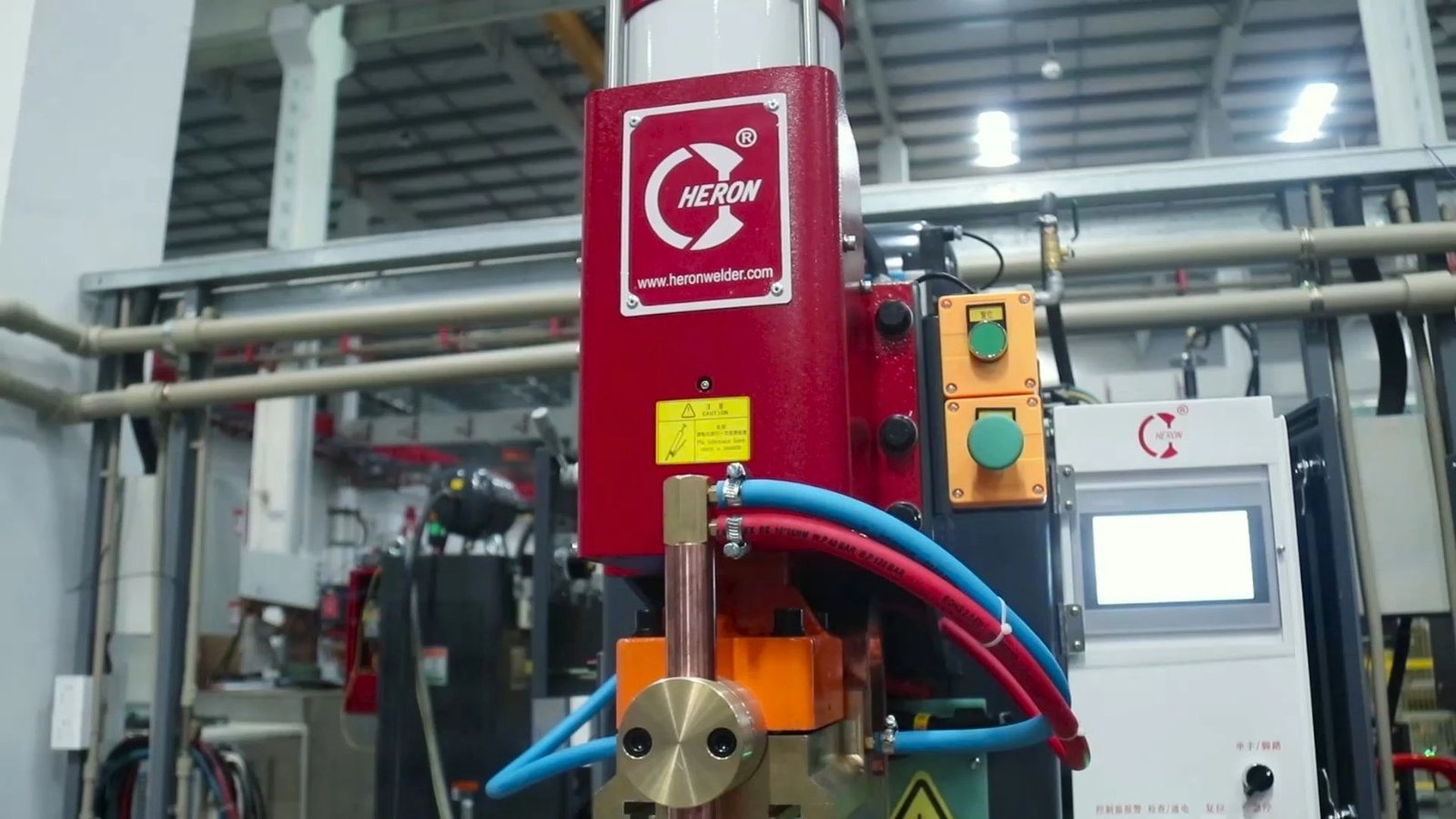
Electric Resistance Welding Explained: Spot, Seam, and Projection Processes
Walk through any automotive body shop, appliance factory, or electronics plant and you will see metal fused in milliseconds with no filler wire, no flux, and no open flame. That quiet efficiency comes from electric resistance welding, a family of processes that uses the electrical resistance of the workpieces themselves to generate fusion heat. Because the energy goes exactly where the joint needs it, resistance welding is fast, clean, repeatable, and easy to automate. This article explains how the process works, compares its three major forms, and shows where each one fits in modern manufacturing.
The Physics Behind the Process
Resistance welding follows a simple principle: pass a large current through metal held under pressure, and the electrical resistance at the interface converts that current into heat. The governing relationship is familiar to engineers, where heat rises with the square of the current multiplied by resistance and time, which explains why weld controllers manage amperage, electrode force, and weld time so precisely. Copper alloy electrodes clamp the workpieces, deliver the current, and contain the molten nugget under pressure until it solidifies. Cooling water inside the electrodes removes residual heat so the next weld starts from the same thermal baseline. Because the weld forms from within the joint rather than from an external arc, the heat-affected zone stays small, distortion stays low, and surrounding surfaces emerge largely unmarked.
Spot Welding: The Workhorse of Sheet Assembly
Spot welding creates discrete nuggets at individual points and dominates sheet metal assembly worldwide. A single car body can carry thousands of spot welds joining floor pans, doors, and pillars, applied by stationary machines or by robots carrying lightweight welding guns. Cycle times of a fraction of a second make the process ideal for high-volume lines, and MFDC inverter technology delivers precise current control with compact transformers that ride easily on robotic arms. Spot welding handles mild steel, coated steels, stainless steel, aluminum, and copper alloys, with the weld schedule tuned to each material’s resistance and thermal behavior. For manufacturers, the appeal is throughput: one operator or one robot can produce hundreds of consistent joints per hour, and automated monitoring verifies each nugget as it forms.
Seam Welding for Leak-Tight Joints
Where a continuous joint is required, seam welding replaces pointed electrodes with rotating copper wheels that roll along the workpieces. Overlapping spot welds, formed by pulsed current as the wheels travel, create a gas- or liquid-tight seam in fuel tanks, drums, mufflers, and heat exchangers. A related variant, mash seam welding, forges the overlapping edges flat under high force for applications such as steel can bodies and automotive wheel rims. Success depends on uniform wheel pressure, consistent travel speed, and clean wheel surfaces, since any variation along the path can open a leak. Automated seam welders integrate drive motors, force systems, and water cooling into compact stations that run for hours with minimal attention, making them a fixture of container and automotive exhaust production.
Projection Welding for Fasteners and Forms
Projection welding concentrates the current through raised projections embossed or machined into one of the mating parts. Because the projections collapse and fuse in a single pulse, multiple welds form simultaneously, which makes the process ideal for attaching nuts, studs, and brackets to sheet metal in one stroke. Large flat copper platens distribute the force evenly across the part, and the total weld time is typically measured in milliseconds. Industries from automotive to appliance manufacturing rely on projection welding because it eliminates drilled holes, rivets, and the secondary operations they require. Cross-wire welding, a close relative, joins wire mesh and grids by the same principle at every wire intersection, producing refrigerator shelves, baskets, and fencing at remarkable speed.
Choosing the Right Process for Your Line
Selecting among the three processes starts with the joint itself. Discrete strong points call for spot welding, continuous sealed joints call for seam welding, and multiple fastener attachments in a single stroke call for projection welding. Material, thickness range, and production volume then narrow the equipment choice: servo-driven force systems for delicate parts, high-force pneumatic or hydraulic heads for heavy plate, and MFDC power supplies for aluminum and coated steels that demand fast current rise. A supplier with experience across all three forms can recommend the configuration that balances cycle time, quality, and cost. Many plants standardize on one equipment family so that operators, spare parts, and maintenance routines stay consistent across the entire floor.
Conclusion
electric resistance welding remains one of the most productive ways to join sheet metal, combining speed, automation, and metallurgical quality in a single clean process. Whether the joint needs a point, a seam, or a projection, understanding these fundamentals helps engineers specify equipment that delivers strong welds shift after shift.
#ResistanceWelding #SpotWelding #SeamWelding #HeronWelder