Subtotal $0.00

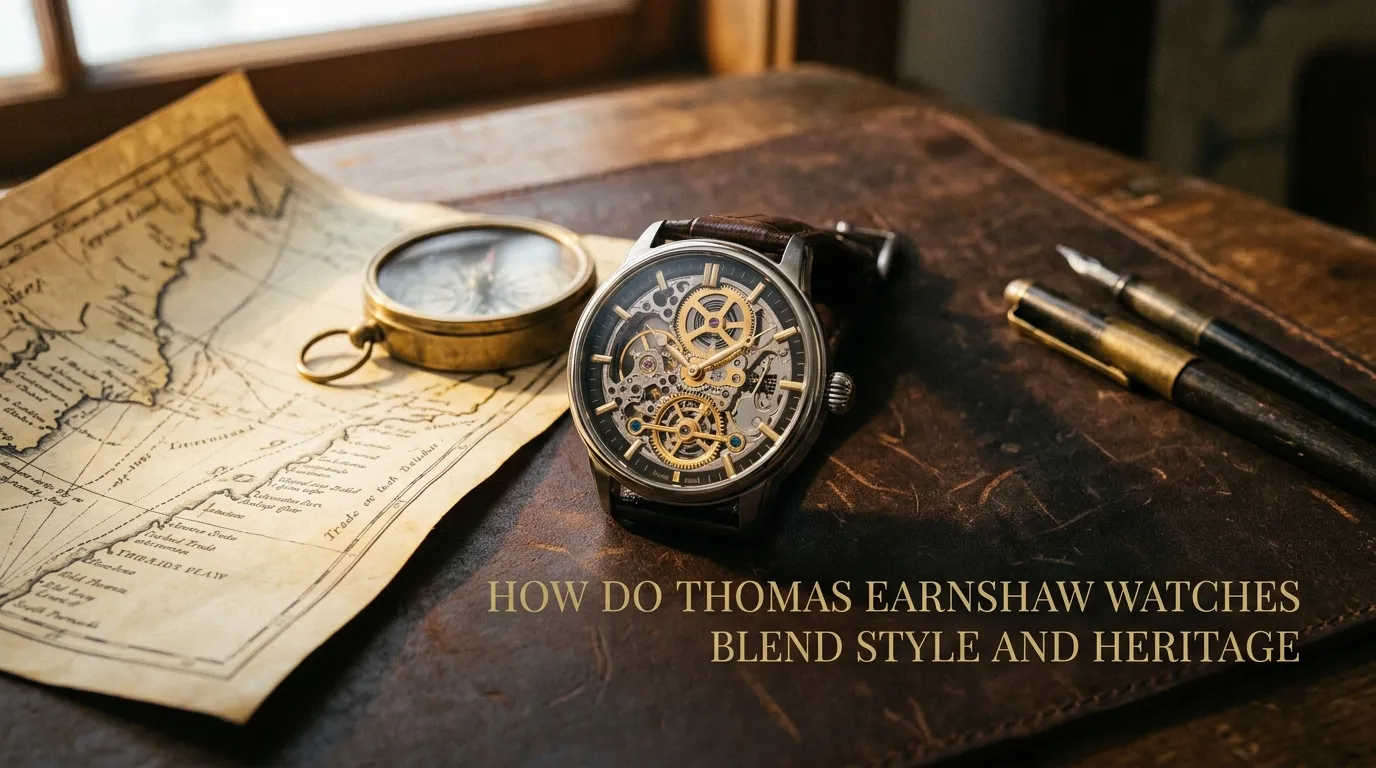
Not many watch brands can claim their namesake actually changed how sailors stayed alive at sea. Thomas Earnshaw watches sit in an unusual corner of the market; they carry a historical pedigree that is completely real, tied to an 18th-century craftsman whose work shaped navigation and, indirectly, the course of scientific discovery. Whether that matters to you probably depends on how you feel about what sits on your wrist. For a growing number of buyers, it matters quite a bit.
The Man Behind Thomas Earnshaw Watches
The story starts, as it should, in the 18th century. Sir Thomas Earnshaw (1749–1829) was a Manchester-born watchmaker who spent much of his working life trying to solve one of the great practical problems of his era: how to keep precise time at sea. Accurate longitude calculation depended on it, and inaccurate longitude got people killed. Earnshaw refined the marine chronometer to a degree that made it genuinely reliable for Royal Navy use, and in doing so earned himself a title he probably would have found understated—”father of the modern chronometer.”
The detail that tends to stop people is chronometer no. 506. That instrument sailed aboard HMS Beagle, the ship that carried Charles Darwin on his voyage around the world and gave him the observations that would eventually become On the Origin of Species. One watch. One voyage. The consequences are still being argued about. In 1805, Earnshaw and John Arnold were formally recognized by the Board of Longitude for their chronometer improvements, and his spring detent escapement became the technical baseline for marine timekeeping for generations. The modern brand did not invent this history. It inherited it.
A Brand Built on Adventure and Exploration
The contemporary Thomas Earnshaw brand kicked off in 2012 with a pitch that was kind of, you know, basically simple: vintage-inspired watches, real mechanical substance, and prices that don’t ask you to take a second loan or something. There was this noticeable gap between cheaply built fashion watches and real Swiss luxury, and the brand stepped into it with a pretty direct aesthetic, not this “let’s try to please everybody” thing.
Each collection gets a name after an explorer, a ship, or a place with actual historical weight. The Westminster, the Maskelyne, and the Kensington—they aren’t just random words picked to sound extra refined. They tie back to an era of British exploration and scientific drive that the original Thomas Earnshaw was connected to. Even if you don’t know that background, the watches still stand on their own visually, but yeah, knowing it adds something.
Design Details That Tell a Story
The design language isn’t trying to be coy about where it comes from. Bold Roman numerals, big onion crowns, and hands that look like they were borrowed from a Victorian longcase clock, those choices are intentional, and they work mostly because the proportions aren’t just randomly slapped together. Skeleton dials and exhibition case backs show up often across the range, and they do a job not only for show: you can actually see the movement. And for people who are only now starting to care about what powers a watch, that transparency is more compelling than it sounds.
Two collections you’ll want on your radar: the Heritage Kensington, with a rectangular case and an open-heart dial that displays the automatic movement, and the Westminster Brunel, which basically treats Victorian industrial engineering as the literal design script. The Brunel version adds pillar-like structures on the dial surface, plus a perlage-finished background, nodding right at Isambard Kingdom Brunel’s engineering vibe. It’s one of the more earnest examples of watch storytelling at this level, and honestly it looks a bit odd in that slow-burn way where you start to like it more, not less.
Color choices go from classic gold and silver to rose gold-ish tones, and the straps usually land in black, grey, or copper leather. The brand also plays with new materials every so often, so it doesn’t feel locked in and stale, though the overall look stays consistent enough that you can still recognize it at a glance.
Movement and Craftsmanship
This part is where the brand gets more serious attention. Some select models run on the Valjoux 7750, which is a Swiss-made 25-jewel automatic chronograph movement, and yeah, it has a pretty established reputation with watch people. Getting a Valjoux 7750 in a watch at this price isn’t something you see constantly, and if you follow movements, you’ll already know what that means. Other models lean on automatic movements with practical complications, things like chronographs, date windows, tachymeters, and sun and moon indicators.
On the practical side, water resistance is 5 ATM on most models, cases are made from 316L stainless steel, and crystal options include anti-reflective coated mineral glass. The two-year international warranty is pretty standard, not wildly exceptional, but it’s there. These are everyday wear watches, built to be worn, rather than stored away like museum pieces. That needs to be said plainly because some watches in this aesthetic zone feel too delicate to actually live with, and these don’t quite fall into that trap.
Value Without Compromise
The honest positioning is this: Thomas Earnshaw sits above fashion watch territory and well below Swiss luxury pricing. That gap is where the brand has built its audience. Buyers who have outgrown fashion watches but cannot justify spending several thousand on a Swiss label often land here, and the fit is usually good.
The collector angle is genuine. Limited edition releases, historically named collections, and dials with enough small detail to reward close looking all point to a buyer who wants more than a logo. These are watches that come with context, and context is something you cannot manufacture cheaply, which is part of why the brand’s real historical foundation matters more than it might seem to on the surface.
A Legacy Worth Wearing
A watch brand with a fabricated backstory and a real 18th-century pioneer in its name are not the same thing, and Thomas Earnshaw watches fall clearly into the second category. The heritage is documented, the design decisions connect to it deliberately, and the mechanical quality at this price range holds up to scrutiny. That combination is less common than the market would have you believe, and it is probably the clearest answer to why these watches attract the buyers they do.