Subtotal $0.00

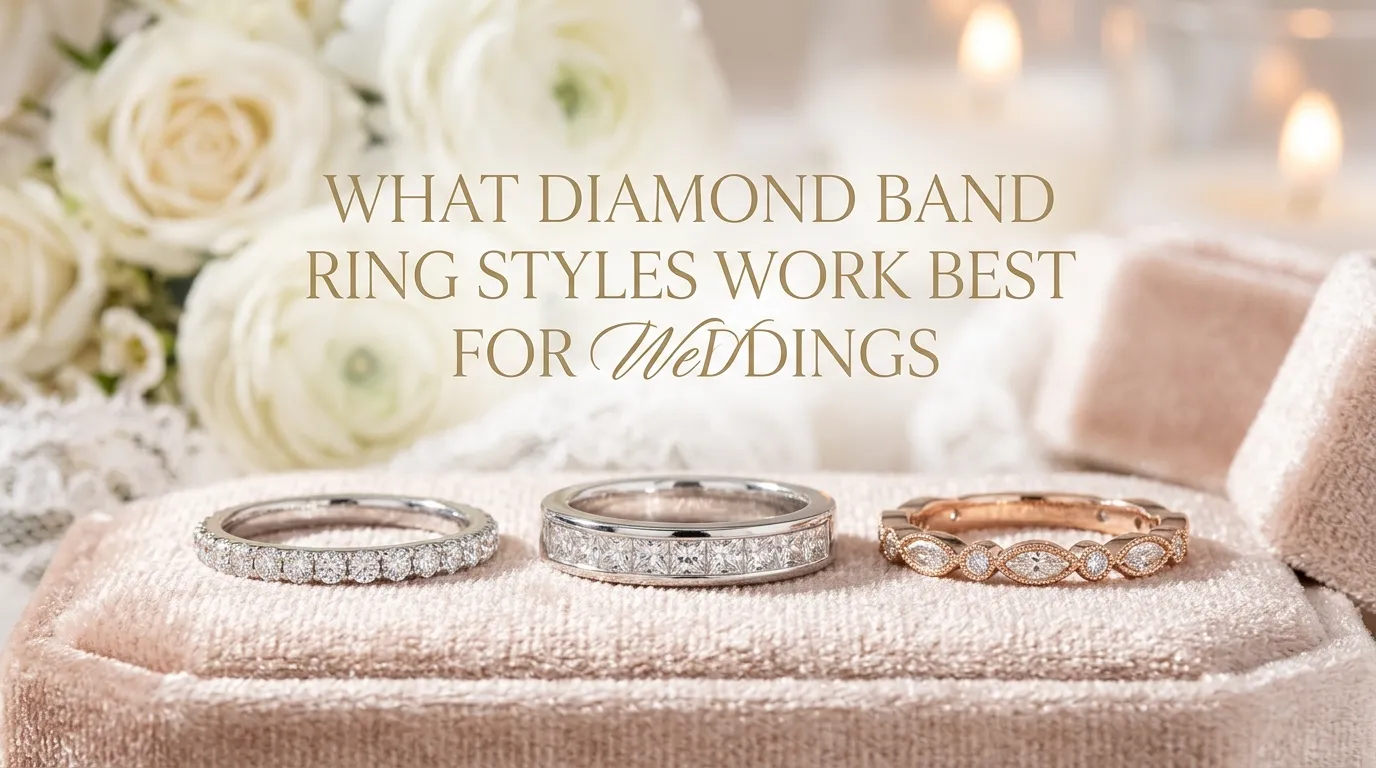
Most people spend months agonising over their engagement ring and then give their wedding band about three days of thought. That is backwards, given that the band is what you will actually wear every single day once the honeymoon is over. A diamond band ring is the most common choice, and the variety out there is genuinely staggering now. If you walk into a jeweller without any idea what you want, you will walk out confused. So before that happens, here is a breakdown of the styles that actually work well for weddings and why each one suits a different kind of person.
Classic Straight Diamond Band Ring Styles That Hold Up Over Time
The straight band is where most people begin, and, yeah, plenty of them end there too. There’s a row of diamonds that sits in a neat line around the finger – no curves, no big show. The way the stones are held in place… that bit matters more than people expect. Channel settings tuck the diamonds between two neat strips of metal so nothing sticks out, which is properly handy if you’re always doing stuff with your hands or just don’t want to think about prongs snagging on sleeves, etc. Prong settings, on the other hand, lift each stone a bit higher and let in more light, so the sparkle feels louder. Then bezel settings basically wrap metal around every diamond, which is the most secure option but also covers the stone more visually. None of these is “the best” in some absolute way. It really comes down to your everyday life and how you treat your hands.
Curved and Contour Bands for Pairing With Your Engagement Ring
If your engagement ring already has a raised centre stone, a straight wedding band will often sit a little off, like it has an awkward gap on each side. That’s exactly why contour bands exist. They’re shaped with a gentle inward curve, so they fit snug beside the engagement ring rather than butting heads with its outline. The look is calmer, more intentional, like it belongs there, not like it was just added. A lot of couples go for a matched set from the same designer, mostly to avoid any “will it fit” anxiety. Other people choose a contour band made custom, so it matches the ring they already own. Either way works, but check the fit with both rings side by side before you say yes to anything.
Eternity Bands When Continuous Sparkle Is the Point
An eternity band has diamonds circling the whole ring, with no plain metal showing anywhere. It looks unreal, like all the highlights are not quiet space. The one useful downside to know early is resizing: because the stones cover the entire band, it isn’t really a simple tweak. Some jewellers won’t resize them at all. So if your finger size shifts with temperature or even weight changes, that’s something to factor in before you commit to a full eternity style. Half-eternity bands place diamonds only across the top and leave the underside plain, which makes sizing way less stressful. And honestly, when you wear it, it can look almost the same as the full one. For most people, the half version is the smarter pick without a real drop in the look.
Vintage and Art Deco Designs for Something With More Personality
Not everyone wants a ring that feels like it rolled off the same production line as everyone else’s. Vintage-inspired bands borrow from Art Deco geometry, Victorian florals, and Edwardian lace-like filigree, often paired with old-cut or rose-cut diamonds that have a softer, less “laser-bright” character than modern stones. One detail you see on many of these rings, milgrain edging, that tiny beaded border around the metal, takes real craft to pull off. It’s the kind of finish that feels handmade, not like a machine just made it neat and done. These bands usually pair nicely with solitaire engagement rings that can use an extra layer of charm. Still, it can feel a bit crowded if both rings are heavily detailed, because the visuals pile up.
Stackable Bands If You Want Flexibility Beyond One Ring
Stackable wedding bands have become super popular, and there’s an obvious reason. Instead of buying one ring and acting like it’s the only forever thing, people grab two or three slim bands. You’ll see folks mix diamond pavé with plain metal and then wear them all together, or kind of switch it up day by day. Over time you can keep adding more pieces on anniversaries, so the whole set feels like it has this ongoing little narrative, not just one frozen snapshot. The trade-off is that stacks can start looking kind of bulky if the bands are too wide. Plus, rings can rotate or shift if they aren’t fitted well enough, so the spacing and comfort matter. If you’re leaning this way, it’s worth getting the sizing done for every band at the same time, from the same jeweller, even if it takes a bit more effort.
Picking the Right Metal for Your Diamond Band Ring
Gold and platinum can look very similar in photos, but in real life they’re doing different things. Platinum is denser and tough; it typically doesn’t need replating, and it’s the least likely to cause a skin reaction, which really matters if you’re sensitive to metals. The downside is cost. White gold is often less expensive, and it can look close at first, but the rhodium plating that gives it that crisp white look slowly fades, so it will usually need redoing every few years. Yellow gold is having a serious moment again, especially with warmer-toned diamonds and those vintage-style settings. Rose gold kind of sits between them for overall warmth, and it looks especially good with oval and pear-shaped stones. The plain truth is this: any option can work, depending on your skin tone, what jewellery you already wear, and what you actually like wearing, not what sounds right on paper.
The Part No One Tells You About Choosing a Wedding Band
Try things on in person. This sounds obvious, but a surprising number of people order wedding bands online based on photos and then find the ring looks completely different on their actual hand. Width matters a lot more than people expect. A band that looks delicate in a product shot can feel substantial on a narrower finger. The way a ring photographs and the way it sits on your skin are two different things. A well-chosen diamond band ring should feel like it belongs on your hand, not like something you are wearing to match a photo you liked. Take the time to try multiple widths, settings, and metals before you decide. The ring will be there every morning for the rest of your life. It is worth the extra hour at the jeweller.