Subtotal $0.00

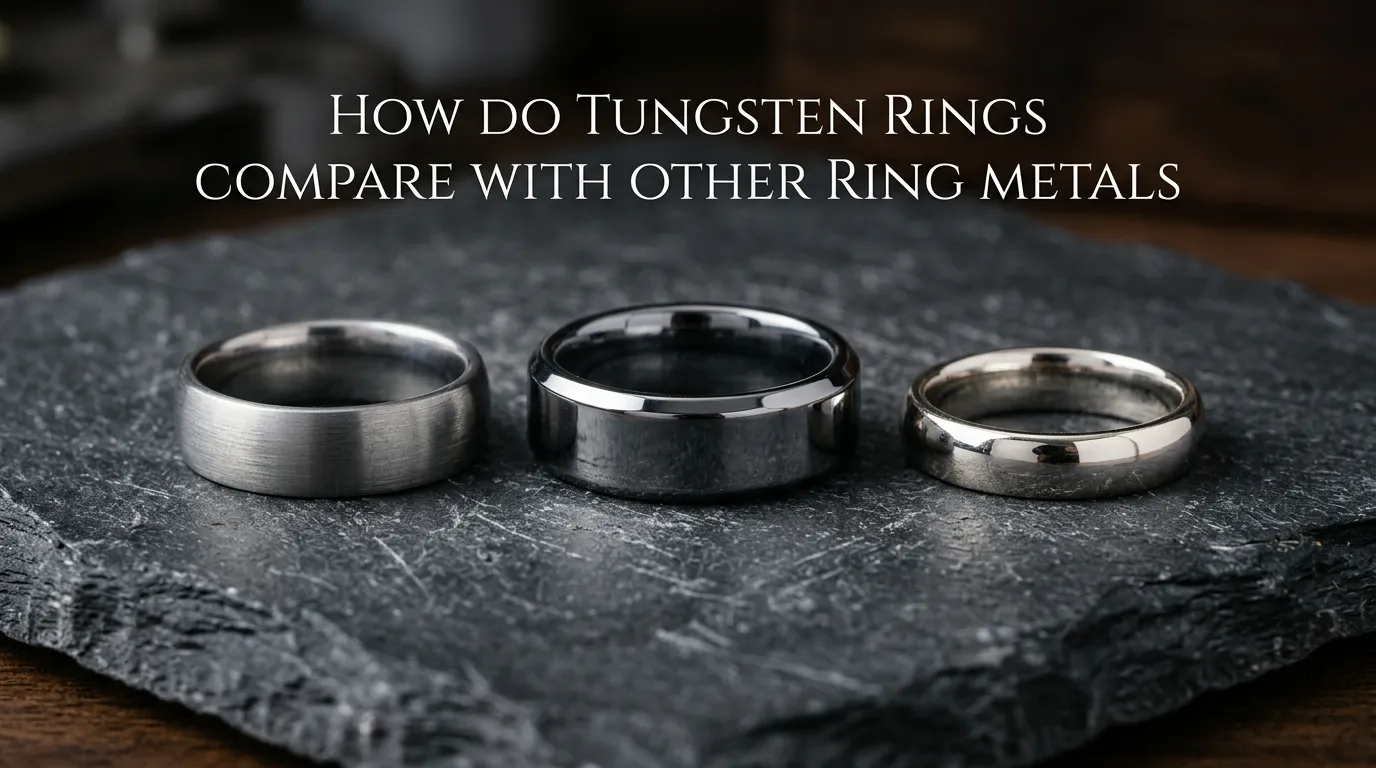
Choosing the right metal for a ring, whether it’s a wedding band or something you wear every day, is one of those decisions that has a subtle impact on both your daily comfort and the ring’s capacity to withstand year after year of regular living. Buyers may feel confined by the plethora of alternatives available today, from conventional gold and platinum to more contemporary options like titanium, stainless steel, and a few other “workhorse” metals. And in the middle of all that, tungsten rings have gotten a lot of attention, mainly for their toughness and that bold look, so it’s pretty smart to compare them carefully against the rest.
What Makes Tungsten Rings Stand Out in Hardness
Most people shopping around are actually surprised by how big the difference is between tungsten carbide (the material behind most jewelry-grade tungsten rings) and traditional precious metals, especially on the Mohs hardness scale. Tungsten carbide lands around 9 to 9.5 on that scale. A diamond is 10, the top spot. Gold varies by karat, but you’ll typically see it between about 2.5 and 4. Platinum usually sits near 4 to 4.5. And yeah, that doesn’t sound dramatic until you realize what it means in real life: gold rings tend to show scratches from everyday contact like keys, tools, door handles, and even gym gear, fast. A tungsten ring, on the other hand, tends to keep its surface looking clean after the same kind of routine bumps.
Then there’s titanium, which a lot of people pick as a modern compromise. Titanium is often listed around 6 to 7, so it resists scratches way better than gold or platinum, but it still doesn’t match tungsten carbide. If you’re the type who actually works with your hands, spends lots of time outdoors, or just wants a ring that doesn’t require mental energy every time you go out, hardness isn’t a minor detail—it matters.
Tungsten vs. Gold and Platinum
Gold has always carried this vibe of loyalty and status in jewelry, but its softness is kind of the downside you feel over time. Even an 18-karat gold ring, where the strength is improved by mixing other metals, will pick up surface wear. Small scratches build up, and eventually the ring loses some of that fresh shine unless you send it out for maintenance or polishing. Platinum does better in comparison, partly because it’s denser, yet it still gathers fine marks and develops a patina. Some wearers treat that as natural character, while others think it looks worn too soon.
Both gold and platinum usually call for periodic upkeep if you want the look to stay sharp, and that upkeep is never free, not just in money but also in effort. Tungsten carbide, in contrast, keeps its appearance under normal wear conditions almost endlessly. So a tungsten ring you buy today should look basically the same a decade later, with only simple cleaning—mild soap, water, that kind of routine—no “professional intervention” needed. And then there’s cost, which is often the real clincher for people. Gold and platinum prices stay high because the material value is baked in, regardless of craftsmanship. Tungsten rings, meanwhile, are typically available for a fraction of the cost without giving up the durability that makes them attractive in the first place.
Tungsten vs. Titanium
Titanium has been one of those most popular alternative ring metals for years, and the whole comparison with tungsten comes up a lot, mostly because both are marketed as modern, tough choices for people kind of moving away from precious stuff. Titanium is genuinely lightweight, which a lot of wearers like for comfort, even during long stretches of wear. It is also biocompatible and hypoallergenic and commonly used in medical implants, so it becomes this strong pick for anyone with metal sensitivities.
Tungsten carbide is usually hypoallergenic too, especially in cobalt-free versions. But the sharpest difference between the two is scratch resistance, like really. Titanium scratches more easily than tungsten, and some folks actually kind of enjoy the wear marks for “character” over time, while others… not so much. Tungsten wins pretty decisively on scratches, though titanium has this flexibility edge—literally. Titanium flexes a bit under pressure instead of shattering, so it feels more forgiving in higher-impact situations. Meanwhile, a tungsten carbide ring, since it is extremely rigid, can crack or shatter if dropped on tile or hit with some very concentrated sharp force. That brittleness is, honestly, the biggest trade-off that comes along with tungsten’s standout hardness.
Tungsten vs. Stainless Steel
Stainless steel rings kind of sit on the most affordable end of the market for ring metals. They’re reasonably durable and resistant to tarnish and rust, and you can find them in a huge range of styles. Still, stainless steel is usually around 5.5 to 6.5 on the Mohs scale, which is well below tungsten carbide. Over years of wear, that gap shows up as scratches build up and dull the finish. Stainless steel is also way lighter than tungsten, which can be either a plus or a negative, depending on the person. Some people really like that heavier, weighty feel of a tungsten ring, calling it a premium solid sensation on the finger. Others say the same weight turns uncomfortable fast, especially if they’re used to lighter metals.
The Resizing and Long-Term Fit Question
There’s one practical limitation that tungsten carbide rings share, and it deserves straight talk. Because tungsten is so extremely hard, rings made from it can’t be resized using regular jewelry methods. You can’t safely stretch or compress the band without messing up its structural integrity. So if your finger size shifts over time from weight changes or other factors, you’ll generally need a replacement ring, not an adjustment.
This part contrasts with gold and platinum, which a skilled jeweler can resize with relative ease. Titanium resizing is also limited but sometimes still possible, depending on the design of the band. For buyers who have had a steady ring size for years and feel confident about their measurements, this issue probably won’t be a big deal in real life. But if someone already expects their sizing might change, it’s a factor worth weighing carefully before committing.
A Balance View for Buyers
No single ring metal is truly “the best” for every person. Precious metals have cultural and emotional meaning that a lot of buyers care about, and the warmth of gold especially has no exact modern replacement. Titanium is sort of a comfortable middle ground, with lightness, flexibility, and decent durability all together. Stainless steel works well for people working with a tight budget, because you can still get that polished look in the short to medium term.
What tungsten rings add to the mix is different: it gives an unmatched level of everyday hardness, a look that stays consistent for years, and a price that usually lands far under precious metals, all while feeling substantial and intentional on the hand. If your main priority is durability above everything and you want a ring that still looks new years from now, it’s hard to argue against tungsten.