Subtotal $0.00

In the bakery and food retail industry, packaging does far more than protect products. It influences presentation, preserves freshness, supports safe handling, and contributes to the overall customer experience. As consumers become more conscious of waste and businesses look for practical alternatives to excessive plastic packaging, paper-based solutions have become increasingly relevant.
Kraft bakery boxes are particularly useful because they combine a natural appearance with functional protection. Made from kraft paperboard, these boxes can be used for cakes, pastries, cupcakes, cookies, doughnuts, bread products, and takeaway treats. Their simple brown finish also fits well with the growing preference for minimalist, recyclable-looking packaging.
For bakeries, cafés, caterers, retailers, and food businesses, choosing the right box involves more than selecting an attractive design. Size, construction, ventilation, product stability, material strength, and visibility all need to be considered.
Why Kraft Packaging Continues to Gain Popularity
Kraft paper packaging has become a familiar choice across food retail because of its combination of practicality and visual appeal. The natural brown appearance can communicate a straightforward, less industrial aesthetic, particularly when paired with simple branding or printed labels.
One important advantage is versatility. Kraft boxes can accommodate a wide range of bakery products, while different board thicknesses and structural designs can provide varying levels of protection.
Businesses may use kraft packaging for:
- Cakes and celebration desserts
- Cupcakes and muffins
- Cookies and biscuits
- Doughnuts and pastries
- Bread and rolls
- Brownies and traybakes
- Takeaway desserts
- Gift and seasonal bakery products
The material can also be combined with other packaging features, including inserts, handles, grease-resistant coatings, and viewing windows, depending on the product and intended application.
Kraft Bakery Boxes With Windows Improve Product Presentation
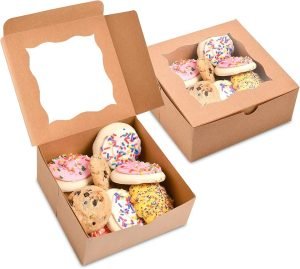
Product visibility can be especially important when packaging visually appealing food. Kraft bakery boxes with window panels allow customers to see the contents without opening the package. This can make decorated cakes, cupcakes, pastries, and assorted desserts easier to display while reducing unnecessary handling.
A window can serve both practical and presentation purposes. Customers can quickly check the appearance of an item, while staff can identify products during storage, collection, or delivery.
However, the window should be appropriately positioned and securely attached. For products containing cream, icing, chocolate, or delicate decoration, packaging should provide enough internal space to prevent contact between the product and the viewing panel.
When selecting a windowed box, businesses should consider:
- Window size: It should provide useful visibility without unnecessarily reducing structural strength.
- Product clearance: Decorations should not press against the window.
- Closure design: The box should remain securely closed during transport.
- Material compatibility: Packaging components should be suitable for the intended food application.
- Presentation: The window should enhance the product rather than distract from it.
These considerations help ensure that visual appeal does not come at the expense of functionality.
Brown Kraft Bakery Boxes and Brand Presentation
The traditional brown appearance of kraft packaging has become strongly associated with natural, simple, and understated branding. Brown kraft bakery boxes can therefore provide a neutral base for stickers, stamps, labels, sleeves, ribbons, and printed logos.
This is particularly useful for small bakeries and independent food businesses that want packaging to complement an artisan or handmade identity. Instead of relying on elaborate graphics, businesses can use typography, a small logo, or a carefully designed label to create a consistent presentation.
Kraft packaging can also support seasonal presentation. A plain box may be adapted for occasions such as Christmas, Valentine’s Day, birthdays, weddings, or corporate events through removable labels and decorative elements.
For larger brands, kraft board can similarly be incorporated into a broader packaging system where product sizes and visual elements remain consistent across multiple locations.
Practical Considerations When Choosing Kraft Window Bakery Boxes
Selecting packaging based solely on appearance can create problems later. Bakery products vary considerably in weight, shape, moisture content, and fragility, so packaging needs to match the product.
1. Choose the correct dimensions
A box that is too large may allow products to move during transportation. One that is too small can damage frosting, toppings, or decorations.
Measure the product carefully and allow sufficient clearance without creating excessive empty space.
2. Consider structural strength
Layered cakes and heavier products require stronger packaging than lightweight cookies. The board grade and box construction should be appropriate for the intended load.
3. Think about moisture and grease
Some bakery products contain oils, fillings, sauces, or high-moisture ingredients. Packaging should be selected with the product’s characteristics in mind. Where necessary, suitable liners, grease-resistant materials, or food-safe barriers may be required.
4. Consider transportation
A box that works well for counter service may not be suitable for delivery. If products are transported by courier or collected by customers, secure closures and sturdy construction become especially important.
5. Assess storage requirements
Packaging should be practical to store before use. Flat-packed designs can reduce the amount of warehouse or back-room space required, particularly for businesses handling significant volumes.
Sustainability and the Role of Kraft Packaging
Sustainability is one of the major trends influencing packaging decisions. Consumers increasingly pay attention to how products are packaged, while businesses are evaluating ways to reduce unnecessary material use.
Kraft paperboard can be an attractive option because paper-based packaging may be easier to integrate into established recycling systems than certain mixed-material alternatives. However, sustainability claims should always be considered carefully.
A box with a plastic window, coating, adhesive, or other additional component may have different disposal requirements from an uncoated paperboard box. Businesses should therefore examine the complete packaging construction rather than assuming that every kraft product has identical environmental characteristics.
A more responsible packaging approach can include:
- Using appropriately sized boxes to reduce excess material
- Avoiding unnecessary secondary packaging
- Selecting materials suitable for local recycling systems
- Using packaging only where it provides a genuine protective or functional purpose
- Communicating disposal guidance clearly when appropriate
Sustainable packaging is ultimately about the entire lifecycle of a product, including material sourcing, manufacturing, transportation, use, and disposal.
Common Packaging Challenges and Practical Solutions
Bakery businesses frequently encounter similar packaging issues. A common problem is product movement inside the box. This can be addressed by choosing a closer-fitting box or using suitable inserts where appropriate.
Another challenge is condensation. Warm or freshly baked products can release moisture that affects packaging and presentation. Allowing products to cool appropriately before packing, when food-safety procedures permit, can help reduce condensation.
Decorated cakes create another challenge because their height and toppings may require additional clearance. In such cases, box height is just as important as base dimensions.
For takeaway pastries and smaller products, excessive packaging can also increase costs and storage requirements. Standardizing a practical range of box sizes can make inventory management easier without forcing every product into the same packaging format.
Packaging providers such as Sky Custom Box can be useful reference points when businesses are assessing different box formats, materials, dimensions, and presentation requirements for retail packaging.
The Future of Bakery Packaging
The direction of bakery packaging is being shaped by several factors at once: sustainability expectations, convenience, food protection, delivery growth, and visual presentation.
Windowed designs are likely to remain relevant because they provide product visibility, while kraft-style packaging continues to appeal to businesses seeking a simple and recognizable aesthetic. At the same time, packaging development is increasingly focused on material efficiency and designs that balance protection with responsible resource use.
For bakery owners and retailers, the most effective approach is not necessarily choosing the most elaborate package. Instead, it is selecting a format that protects the product, supports efficient handling, presents the food attractively, and fits the business’s sustainability objectives.
Conclusion
Kraft bakery boxes offer a practical packaging solution for businesses looking to balance product protection, presentation, and material considerations. From traditional brown boxes to kraft window bakery boxes, different formats can accommodate everything from everyday pastries to premium celebration cakes.
The right choice depends on the product’s dimensions, weight, moisture level, decoration, transport requirements, and presentation goals. By considering these factors before selecting packaging, bakeries and food retailers can reduce common handling problems while creating a more consistent customer experience.
Ultimately, effective bakery packaging should do three things well: protect the product, present it professionally, and use materials thoughtfully. When those priorities are considered together, kraft packaging can become a practical part of a modern bakery’s retail and takeaway strategy.
Read more: