Subtotal $0.00

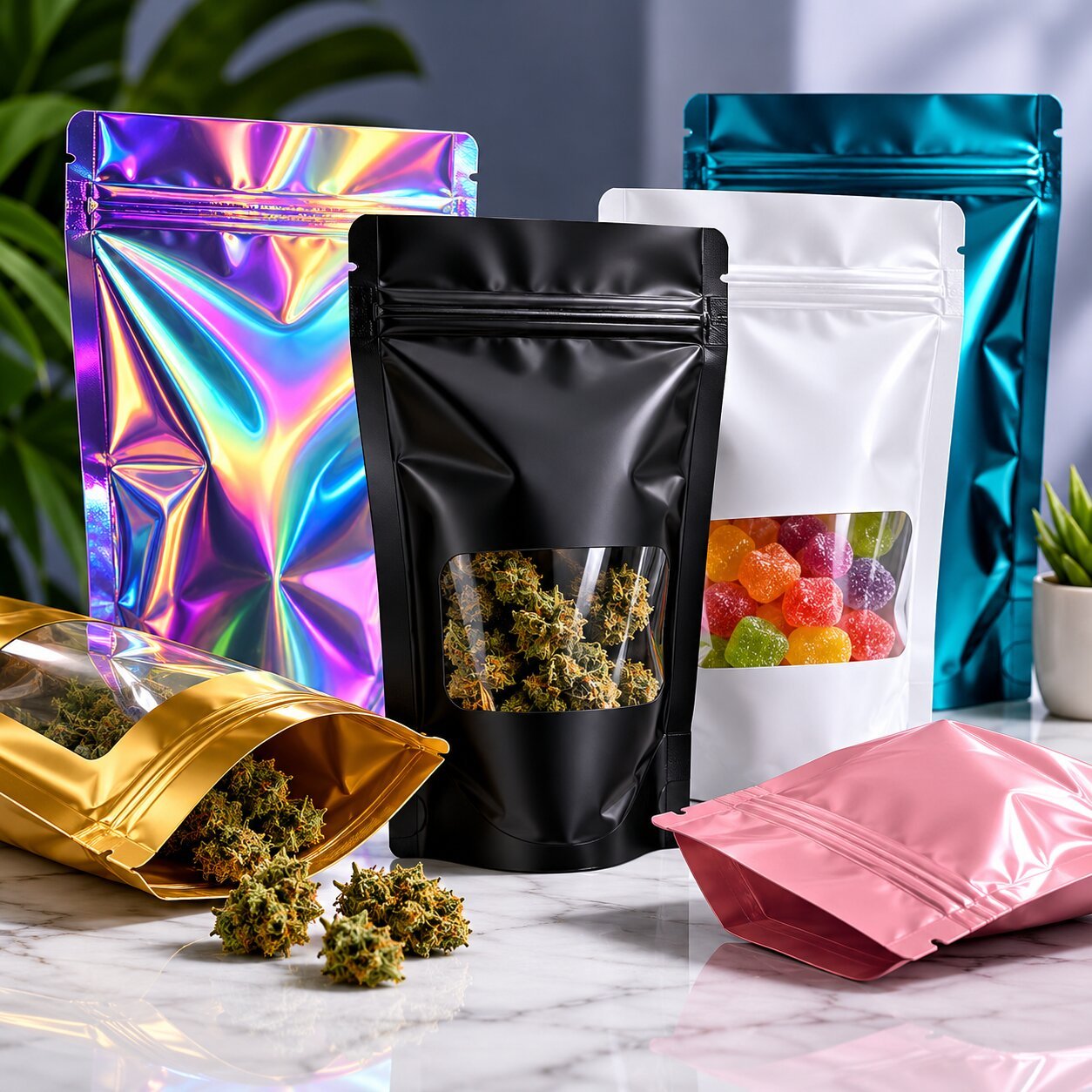
Packaging plays an important role in protecting products and keeping them in good condition during storage, handling, and transportation. For businesses that need flexible packaging with strong barrier properties and a customized appearance, Custom Mylar Bags can be a practical option.
Mylar bags are commonly used for a wide range of products, including snacks, coffee, dried foods, powders, pet treats, supplements, and specialty goods. They can be produced in different sizes, shapes, closures, and finishes, allowing brands to create packaging around specific product requirements.
Before choosing custom bags, it’s important to consider the material structure, size, closure, printing, product protection, and intended use.
Why Do Products Need Custom Mylar Bags?
Packaging needs vary from one product to another. A small quantity of powder requires a different bag size from a large serving of snacks, while products sensitive to moisture or oxygen may require stronger barrier protection.
Custom bags allow businesses to select dimensions and features according to their products.
They can also provide space for brand identity and important product information. A professionally designed bag can display the product name, logo, ingredients, usage information, storage instructions, barcode, and other relevant details.
What Are Mylar Bags Made From?
Mylar packaging typically uses a layered flexible material structure designed to provide strength and barrier protection. The exact construction can vary depending on the intended application.
Different layers can help provide resistance to factors such as moisture, oxygen, light, and external handling.
The appropriate material structure depends on the product’s sensitivity and storage requirements. Businesses should discuss the required barrier properties with their packaging supplier rather than assuming every Mylar bag provides the same level of protection.
What Size Should Custom Mylar Bags Be?
Bag dimensions should be selected according to the product volume and how it will be filled.
Consider:
- Product weight
- Product volume
- Product shape
- Filling method
- Required headspace
- Closure type
- Storage requirements
A bag that’s too small can be difficult to fill and seal. A bag that’s too large may use unnecessary material and provide excess empty space.
Custom sizing allows businesses to create packaging that fits the product more appropriately.
Which Mylar Bag Style Should You Choose?
Different structures can be used depending on how the product needs to stand, open, close, and display.
Flat Mylar Bags
Flat pouches are useful for lightweight products and compact packaging applications.
Stand-Up Pouches
Stand-up bags have a bottom gusset that allows the package to stand on a shelf or display surface.
Flat-Bottom Bags
Flat-bottom structures provide a broader base and can offer additional stability and display space.
Side-Gusset Bags
Side-gusset designs expand from the sides and can accommodate products with larger volumes.
The right style depends on the product, filling process, storage method, and retail presentation.
Do Custom Mylar Bags Need a Zipper?
A zipper closure can be useful when customers are expected to open and close the package multiple times.
Resealable packaging can help maintain convenience after the initial opening. This can be particularly useful for snacks, coffee, dried foods, pet treats, and other products that may not be consumed immediately.
However, not every product needs a zipper. For single-use products, a simple heat-sealed closure may be sufficient.
How Important Is the Seal?
The seal is an important part of flexible packaging.
A reliable seal helps keep the package closed and can support product protection during storage and transportation.
The sealing method should be compatible with the selected bag material and filling process. Businesses should test the finished packaging to make sure the seal performs properly under expected handling conditions.
What Products Can Be Packed in Custom Mylar Bags?
Mylar bags can be used for many product categories, depending on the required packaging specifications.
Examples include:
- Coffee
- Tea
- Snacks
- Dried fruit
- Nuts
- Pet treats
- Powdered products
- Baking ingredients
- Specialty foods
- Small consumer goods
The packaging should always be selected according to the product’s specific storage and protection requirements.
How Can Mylar Bags Protect Products?
One of the main advantages of multilayer flexible packaging is its ability to provide a barrier against environmental factors.
Depending on the material construction, the packaging may help protect products from:
- Moisture
- Oxygen
- Light
- Odors
- Contamination
- General handling
The required barrier level varies by product. Foods with a high sensitivity to moisture or oxygen may need a different packaging structure from dry products that are less sensitive.
What Printing Options Are Available?
Custom Mylar Bags provide a large printable surface for brand presentation.
Packaging artwork may include:
- Logo
- Product name
- Product description
- Ingredients
- Nutritional information
- Usage instructions
- Storage guidance
- Barcode
- Contact information
- Product graphics
Digital printing can be useful for flexible packaging designs, particularly when detailed artwork or multiple product variations are required.
The artwork should be designed around the actual bag dimensions so that important information isn’t placed too close to seals, gussets, or closures.
Should You Choose Matte or Gloss Finish?
The finish affects the visual appearance of the package.
A matte finish provides a smooth, understated look and can work well with premium or minimalist branding.
A gloss finish creates a brighter surface and can make printed colors appear more vibrant.
Some packaging designs combine different visual effects to emphasize specific elements. The choice should depend on the product category, brand identity, and desired appearance.
Can Custom Mylar Bags Have Transparent Windows?
A transparent window can allow customers to see the product inside the package.
This can be useful for products where appearance is an important part of the buying decision, such as snacks, coffee, dried foods, or specialty products.
However, a window may reduce the amount of opaque barrier material covering that area. If maximum light protection is important, a fully opaque package may be more appropriate.
The decision should therefore be based on both presentation and product protection.
What Should Be Printed on the Packaging?
The information required depends on the product and market. Businesses should verify applicable labeling regulations before production.
Common information may include:
- Brand name
- Product name
- Net quantity
- Ingredients
- Nutrition information
- Allergen details
- Directions
- Storage instructions
- Manufacturer information
- Barcode
- Batch or product identification
The text should remain clear and readable. Avoid filling every available area with information because crowded packaging can be difficult for customers to understand.
How Does Bag Design Affect Product Presentation?
The bag is often one of the first things customers notice. Its shape, colors, graphics, typography, and finish all contribute to the product’s visual identity.
A consistent packaging system can help businesses manage multiple products. Different flavors, sizes, or varieties can use individual colors or graphics while keeping the same core brand elements.
This creates a recognizable product range without making every package look identical.
What Should You Consider for Shipping?
Flexible bags are lightweight, but shipping requirements still need attention.
Consider whether the bag can withstand normal handling, stacking, compression, and movement. Products that contain sharp pieces or have unusual shapes may require stronger packaging structures.
For larger quantities, individual bags can be placed inside outer cartons to provide additional protection during transportation.
Before launching a product, test the packaging through normal handling and shipping conditions.
How Many Custom Mylar Bags Should You Order?
Order quantity should be based on expected sales, storage space, budget, and product stability.
New businesses may prefer smaller production runs while testing a product or packaging design. Established brands with predictable demand may choose larger quantities.
Large orders can sometimes reduce the unit cost, but excess inventory can become a problem if the product name, branding, size, or labeling changes.
A practical approach is to balance unit pricing with realistic demand.
Should You Request a Sample?
A sample can help identify packaging problems before full production.
Check:
- Bag dimensions
- Product capacity
- Seal position
- Zipper operation
- Print quality
- Color appearance
- Material feel
- Gusset structure
- Overall presentation
Testing the actual product inside the bag provides more useful feedback than evaluating artwork alone.
What Common Mistakes Should You Avoid?
One common mistake is selecting a bag based only on appearance. The material also needs to match the product’s storage and protection requirements.
Choosing the wrong size can create filling and presentation problems. A bag that’s too small may be difficult to seal, while an oversized bag may look poorly filled.
Another mistake is placing important artwork too close to the seal or gusset.
Businesses should also avoid skipping sample testing. A physical sample can reveal problems with capacity, closure, printing, or handling before a large quantity is produced.
How Do You Choose the Right Custom Mylar Bags?
Start by identifying the product and its protection requirements. Determine whether moisture, oxygen, light, or other environmental factors need special consideration.
Next, select the bag size, structure, closure, and material construction. Then develop the artwork around the actual packaging dimensions.
Finally, consider printing, finishing, quantity, shipping, and budget. Requesting a sample before full production can help confirm that everything works together.
The right Custom Mylar Bags should provide an appropriate combination of product protection, convenient handling, clear information, and professional presentation.
Final Thoughts
Flexible packaging can offer businesses a practical way to protect and present many different types of products. Custom Bags provide flexibility in size, structure, closure, printing, and finishing, making them suitable for a broad range of packaging applications.
The best results come from choosing packaging based on the product rather than appearance alone. By considering material construction, dimensions, sealing, barrier requirements, design, quantity, and shipping conditions, businesses can create bags that are functional and visually appealing.
Whether you’re packaging snacks, coffee, dried products, pet treats, or specialty goods, carefully planned Mylar packaging can help keep the product protected while giving the brand a clear and professional package.